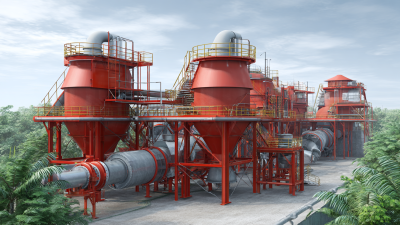
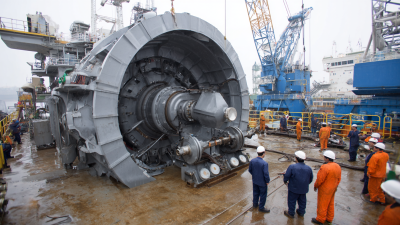
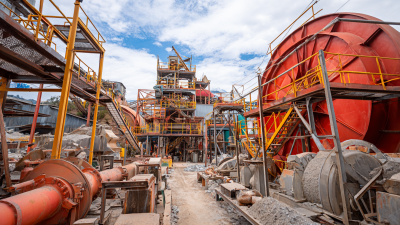
When it comes to the industrial world, picking the right separation tech is a pretty big deal. Dr. Emily Johnson, who’s pretty much an expert on hydrocyclones at Separation Solutions Inc., likes to say, "Hydrocyclone separators are super efficient and also kind on the wallet." Basically, a hydrocyclone separator uses centrifugal force to kick solids out of liquids. It’s a really smart pick, especially for industries like mining or doing wastewater treatment.
Now, these separators have some pretty cool perks. They’re small, lightweight, and don’t give you a headache when it’s time to keep them up. Plus, with their simple design and fewer moving parts, they can save you some bucks. But here’s the thing—you can’t just slap one on and hope for the best. You gotta understand what your specific needs are first.
Some folks might overlook the fact that hydrocyclones don’t work so well with high-viscosity liquids—that’s a fancy way of saying really thick stuff. If you ignore that, performance might not be great. So, you definitely want to weigh out any potential issues before you decide. By taking a close look at what you actually need, you’ll be in a much better spot to make a smart choice. Picking the right hydrocyclone separator can really make a difference and boost your entire process.

What is a Hydrocyclone Separator and How Does It Work?
A hydrocyclone separator is a crucial tool in various industrial processes. It separates particles from liquids based on density differences. The design resembles an inverted cone. When fluid enters, it creates a cyclone effect, generating centrifugal forces. This action efficiently separates heavier particles, which settle at the bottom, while lighter materials rise.
Understanding how it works is key. Fluid enters tangentially, swirling inside the cone. The diameter and shape influence the separation efficiency. It can seem simple, but many factors affect performance. For instance, variations in flow rate change separation results. It's important to regularly adjust settings.
A hydrocyclone can be innovative yet challenging. Users may struggle with optimal sizing or maintenance. Ensuring proper performance requires knowledge and experience. It’s an essential but complex piece of equipment. Operators often need to rethink their approach after initial implementation. Understanding the nuances ensures the best outcomes.
Why Choose a Hydrocyclone Separator for Your Industrial Needs? - What is a Hydrocyclone Separator and How Does It Work?
| Feature |
Description |
Benefits |
| Separation Efficiency |
High performance in separating particles based on size and density. |
Improves product quality and reduces waste. |
| Low Maintenance |
Robust design with minimal moving parts. |
Cost-effective operation over time. |
| Compact Size |
Space-saving design suitable for various applications. |
Easier installation and integration into existing systems. |
| Versatility |
Applicable in various industries, including mining, wastewater treatment, and oil & gas. |
Adapts to different processes and materials. |
| Cost Efficiency |
Relatively low initial investment compared to other separation technologies. |
Improves return on investment through energy and labor savings. |
Key Applications of Hydrocyclone Separators in Industry
Hydrocyclone separators are becoming increasingly popular in various industrial applications. Their key advantage lies in the efficient separation of solids from liquids or different liquid phases. According to a report by the International Journal of Mineral Processing, hydrocyclones can achieve separation efficiencies of up to 90%, proving invaluable in industries like mineral processing and wastewater treatment.
In the mining sector, hydrocyclones are used to classify ores. They separate fine particles from coarser ones, enhancing overall recovery rates. A study by the Society for Mining, Metallurgy & Exploration found that using hydrocyclones improved ore concentration by approximately 15%, which is quite significant. Conversely, not all installations yield optimal results; operational conditions must be fine-tuned.
Another crucial application is in the oil and gas industry. Hydrocyclones efficiently separate water from crude oil, leading to higher product quality. Reports suggest that hydrocyclone installation can reduce water content in oil to below 1%, which is ideal for transport and sale. However, improper design or maintenance can lead to issues, including particle buildup and reduced efficiency. The balance of performance and maintenance is vital for success.
Benefits of Using Hydrocyclone Separators for Particle Separation
Hydrocyclone separators play a crucial role in various industrial processes. Their efficiency in separating particles based on size and density is unmatched. According to a report by the Global Mining Review, hydrocyclones can achieve separation efficiencies exceeding 90%. This high level of performance is vital in industries like mining, minerals processing, and wastewater treatment.
One significant benefit is their low operational costs. Hydrocyclones require minimal maintenance and have no moving parts. A study from the Journal of Separation Science reveals that employing hydrocyclones can reduce energy consumption by up to 30% compared to traditional separation methods. However, it's essential to ensure proper sizing and configuration to maximize efficiency. Poor design can lead to suboptimal separation outcomes.
In the mining sector, for instance, the wrong hydrocyclone dimensions can cause excessive wear and reduced lifespan. Continuous monitoring is necessary to ensure optimal performance. While the technology is robust, it is not foolproof. Understanding the limitations and potential for inefficiencies is crucial. Users must assess how well these systems integrate with existing processes.
Comparing Hydrocyclone Separators to Other Separation Methods
When it comes to industrial separation methods, hydrocyclone separators stand out. They offer a unique approach to separating particles based on size and density. Unlike traditional methods like sedimentation or filtration, hydrocyclones utilize centrifugal force. This design efficiently removes solids from liquids, making it ideal for many applications.
Other separation techniques can be slower and less efficient. Filtration may clog easily, leading to maintenance challenges. Sedimentation often takes longer to achieve results. Hydrocyclones can process large volumes quickly. They can handle abrasive materials without losing performance. However, they require careful monitoring to ensure optimal operation. If not calibrated properly, they may not yield desired outcomes.
Despite their effectiveness, hydrocyclones are not without flaws. They can struggle with fine particle separation under certain conditions. Operators must consider the specific characteristics of their materials. Understanding these variables is crucial for maximizing efficiency. Adjustments to operational parameters may be necessary to achieve the best results. In an industrial setting, every detail matters.
Factors to Consider When Choosing a Hydrocyclone Separator
When considering a hydrocyclone separator, several factors play a crucial role in the selection process. One major consideration is the specific application.
In industries like mining and wastewater treatment, choosing the right hydrocyclone can significantly impact efficiency.
According to a recent report from the Chemical Engineering Journal, the efficiency of hydrocyclones in separating solids can exceed 90% under optimal conditions.
This shows the importance of matching specifications to your unique needs.
Another vital factor is the particle size distribution of materials being processed. Hydrocyclones perform differently based on the size and density of solids.
For example, research from the Journal of Environmental Management indicates that hydrocyclones are particularly effective in separating fine particles (less than 10 microns).
This is critical in industries where precision is necessary.
Additionally, the wear and tear on hydrocyclones can be problematic. Operators must assess materials and potential maintenance needs carefully, as failures can occur when equipment is not suited to the application.
Lastly, considering the operational parameters such as pressure and flow rates is essential. Each hydrocyclone design has specific limits.
Deviating from these can reduce separation efficiency. Many users overlook this aspect and face operational challenges.
Ultimately, focusing on these factors will lead to an informed decision, even if it requires reflection on past experiences and potential inefficiencies.
Maintenance and Care for Hydrocyclone Separators in Industrial Settings
Hydrocyclone separators play a crucial role in industrial processes. Their efficiency in separating solids from liquids depends heavily on proper maintenance and care. Regularly inspect the units for wear and tear. Look for signs of abrasion on the liners and outer shell. Small issues can escalate quickly, leading to costly downtime.
Tips for maintenance: Check the inlet and outlet for clogs. Clean them regularly to ensure smooth operation. A clean hydrocyclone runs better and lasts longer. Additionally, monitor the pressure drop across the separator. A sudden change could indicate a problem that needs urgent attention.
Don't forget to review the operational parameters frequently. Sometimes, minor adjustments can lead to improved performance. Operators might overlook these details, which can ultimately affect the efficiency of the entire system. Keeping a maintenance log is beneficial. Recording dates and observations helps identify patterns over time.
Future Innovations in Hydrocyclone Separator Technology
The hydrocyclone separator is evolving rapidly. Future innovations focus on efficiency and performance. These advances can lead to better material processing. Enhanced designs will improve the separation of particles. New materials may offer reduced wear and tear. This allows for longer service life and less maintenance.
Tips: Regularly assess your hydrocyclone’s performance. Watch for changes in efficiency. Document any variations carefully.
Additionally, automation is on the horizon. Smart technology will monitor operations in real-time. This provides instant feedback for adjustments. Users can expect improved accuracy in particle separation. However, reliance on technology brings risks. Understanding its parameters is essential.
Tips: Train staff on new technologies. Keep communication open. Address concerns immediately to prevent issues.
Future advancements also consider sustainability. Hydrocyclones are becoming more energy-efficient. They minimize waste and improve recycling processes. Yet, these improvements require an upfront investment. Some facilities may hesitate to upgrade. Careful consideration and planning are necessary to ensure success.
FAQS
: Begin with small, achievable goals. Set realistic timeframes for yourself. Listen to your body and adjust as needed.
Find activities you enjoy. Join a group or partner with friends. Track your progress and celebrate small wins.
Don't be too hard on yourself. Reflect on what caused the miss. Plan to stay consistent moving forward.
Prepare meals in advance. Keep healthy snacks on hand. Choose simple recipes to save time and effort.
Sometimes, stress impacts energy levels. Evaluate your daily habits. Consider discussing with a health professional if it persists.
Staying hydrated supports overall performance. Aim for consistent intake throughout the day. Dehydration can hinder your workouts.
Track various metrics like weight, strength, or endurance. Use a journal or apps to visualize your improvements.
Look out for persistent fatigue or muscle soreness. A lack of motivation is also a sign. Reflect on your routine and listen to your body.
Conclusion
A Hydrocyclone Separator is a vital tool in various industrial applications, primarily designed for efficient particle separation by utilizing centrifugal force. It operates by channeling slurry into a conical shape, allowing denser particles to be separated from lighter ones. Industries widely employ Hydrocyclone Separators for tasks such as mineral processing, wastewater treatment, and fine particle classification due to their high throughput and efficiency.
Selecting the right Hydrocyclone Separator involves considering factors such as the specific particle size, feed rate, and the properties of the materials being separated. Regular maintenance is essential to ensure optimal performance and longevity, thus enabling industries to continuously benefit from this technology. With ongoing innovations, Hydrocyclone Separators are poised to become even more effective and versatile, paving the way for future advancements in separation technology.