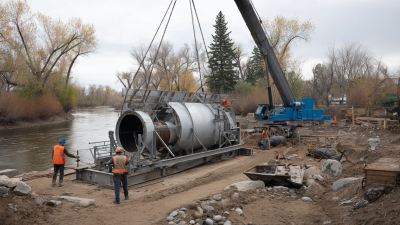
You know, in the oil and gas world, keeping equipment in top shape and making sure everything runs smoothly is a big deal. One of those key players in getting things done right is the desander. It’s basically a crucial piece of gear that helps remove solids—especially sand—from the drilling fluids. Why? Well, it protects the equipment downstream and helps keep operations running without a hitch. John Smith, who’s pretty much an expert when it comes to well production tech, puts it nicely: "A good desander is absolutely essential for protecting our systems and making sure everything flows smoothly in the field."
What a desander actually does is pretty straightforward but super important—it separates out those tiny particulates from the liquids, which, in turn, cuts down the wear and tear on pumps and other gear. Plus, it helps maintain the quality of the fluids everyone’s relying on. Thanks to this technology, oil and gas companies can stretch out the lifespan of their equipment and, at the same time, boost their production numbers. As the industry keeps changing and improving, having effective desanding tools remains a key focus for operators trying to be more efficient and cut down on costs. It’s all about staying ahead and making sure everything runs as smooth as possible.

What is a Desander? Definition and Function in Oil and Gas
A desander is a critical component in the oil and gas industry, designed to remove sand and other solid particles from fluid streams, primarily in drilling, completion, and production operations. By utilizing a mechanical separation process, desanders help maintain the integrity of wells and production equipment, preventing wear and damage caused by abrasive particles. According to a report from the International Association of Drilling Contractors (IADC), sand production can significantly impact well productivity, leading to costly downtime and maintenance.
The function of a desander is to protect downstream equipment, such as pumps and compressors, by ensuring that the fluid being processed is free from damaging solid particles. Typically, these devices operate using technologies like hydrocyclones or gravity settling, which efficiently separate sand from liquids based on density differences. A study published by the Society of Petroleum Engineers (SPE) estimates that effective sand management can improve overall production efficiency by up to 15%, highlighting the importance of desanders in modern oil and gas operations. By mitigating sand-related issues, operators can enhance the lifespan of their equipment and boost overall well performance in an industry that is increasingly focused on maximizing resource extraction.
The Importance of Desanders in Oil and Gas Production
Desanders play a crucial role in the oil and gas industry by serving as essential equipment designed to remove solid particles from produced fluids. These solids, which can include sand and silt, pose significant risks to both production efficiency and equipment integrity. By extracting these particles before they can damage downstream processes or lead to costly repairs, desanders help maintain operational continuity and reduce maintenance costs. Their effectiveness directly correlates to enhanced productivity, making them indispensable in modern oil and gas extraction.
In addition to protecting equipment, the removal of solid contaminants is vital for meeting regulatory compliance and environmental standards. Excessive sand production can lead to not only wasted resources but also potential ecological harm if left unchecked. Desanders contribute to environmentally responsible practices by ensuring that produced fluids are cleaner, minimizing the impact on waste treatment systems and surrounding ecosystems. Thus, the importance of desanders extends beyond technical performance; they are crucial for sustainable operations in an industry increasingly focused on environmental stewardship and efficiency.
Desander Efficiency in Oil and Gas Production
Types of Desanders: Characteristics and Applications
Desanders are crucial components in the oil and gas industry, designed to remove sand and other solid particles from fluids. Their effectiveness depends largely on the type of desander employed, each with distinct characteristics and applications tailored to specific operational needs. The most common types include
hydrocyclone desanders,
gravity desanders, and
filtration desanders, each offering unique advantages depending on the context.
Hydrocyclone desanders utilize centrifugal force to separate sand from liquid, making them ideal for high flow rates and applications where space is limited. These devices can efficiently handle large volumes of fluid while minimizing pressure drops.
On the other hand, gravity desanders rely on the natural settling of sand particles due to gravity. They are particularly useful in applications with lower flow rates and are often favored for their simple design and ease of maintenance.
Lastly, filtration desanders involve the use of porous media to trap solids, making them suitable for applications requiring fine particle removal and enhancing overall fluid quality.
Each type of desander plays a significant role in ensuring operational efficiency and process integrity in the oil and gas sector.
How Desanders Improve Efficiency and Reduce Costs in Operations
Desanders are critical components in the oil and gas industry, designed to remove sand and other solids from drilling fluids. The effective operation of desanders significantly enhances the efficiency of drilling operations while concurrently reducing operational costs. According to a report by the International Association of Drilling Contractors, issues related to solids control can lead to a reduction in drilling efficiency by as much as 30%, translating to millions of dollars in lost revenue. By utilizing desanders, companies can maintain the viscosity and density of drilling fluids, allowing for smoother operations and minimizing downtime.
In addition to improving operational efficiency, desanders also contribute to cost reduction. A study by the American Petroleum Institute noted that effective solids removal can lower the wear on pumps and other equipment, extending their lifespan and reducing maintenance costs by up to 40%. Furthermore, the removal of solids enhances the performance of drilling fluids, which leads to reduced fluid loss and, consequently, lower costs associated with fluid replenishment. By integrating desanders into drilling operations, companies not only streamline their processes but also achieve significant savings, highlighting the essential role of these technologies in maximizing productivity and profitability in the oil and gas sector.
Operational Mechanism: How Desanders Separate Solids from Fluids
Desanders play a crucial role in the oil and gas industry by effectively separating solids from fluids in various processes. The operational mechanism of a desander typically involves the use of hydrocyclones, which utilize centrifugal force to separate particulates from the liquid phase. As the fluid enters the hydrocyclone at a tangential angle, it is forced to spin rapidly, creating a vortex that pushes denser solid particles to the outer wall. These particles then spiral downwards, eventually being collected and removed from the unit.
The efficiency of solid separation largely depends on the size and density of the particles, as well as the flow rate of the incoming fluid. The lighter liquid, after the solids have been removed, exits through a central outlet at the top of the desander. This design not only ensures that the solids do not compromise the integrity of downstream equipment but also enhances the overall operational efficiency of oil and gas production systems.
By maintaining a clean fluid pathway, desanders contribute significantly to reducing wear on pumps and compressors and help optimize the extraction process.
Industry Standards and Best Practices for Desander Installation
When installing a desander in the oil and gas industry, adhering to industry standards and best practices is crucial for ensuring optimal performance and longevity. One key practice involves conducting comprehensive site assessments before installation. This step helps in understanding the specific operational conditions and requirements of the facility. Factors such as fluid composition, flow rates, and environmental conditions must be thoroughly analyzed to select the appropriate desander type and configuration.
Proper installation techniques also play a significant role in the effectiveness of a desander. It's essential to ensure that the unit is positioned correctly within the pipeline to maximize its ability to remove sand and other solid particles. Following manufacturer guidelines and relevant industry standards can greatly enhance system reliability. Moreover, regular maintenance schedules should be established to monitor unit performance, allowing for timely interventions that can prevent equipment failures and extend the lifespan of the desander.
Implementing these best practices not only protects the infrastructure but also contributes to overall environmental safety and operational efficiency.
Key Performance Indicators for Evaluating Desander Effectiveness
In the oil and gas industry, desanders play a crucial role in maintaining the efficiency and integrity of production systems by removing solid particles from the fluid streams. Evaluating the effectiveness of a desander is essential to ensure optimal performance, which can be gauged using key performance indicators (KPIs). These KPIs typically include the desander's efficiency rate, which measures the percentage of solids removed, and the pressure drop across the desander, indicating how well the unit is functioning without causing undue strain on the overall system.
Another critical KPI is the maintenance frequency, as it reflects the reliability of the desander. A lower frequency suggests better performance, minimizing downtime for repairs and replacements. Additionally, monitoring the total cost of operation, including energy consumption and maintenance expenses, aids in assessing the economic viability of the desander.
Tips: Regularly assess and document the performance metrics of your desander to identify trends and areas for improvement. Implementing a robust maintenance schedule can help reduce unexpected failures and prolong equipment life. Furthermore, investing in training for personnel on optimal desander operation can lead to enhanced efficiency and reduced operational costs.
FAQS
: Desanders are designed to remove sand and other solids from drilling fluids, enhancing the efficiency of drilling operations.
By effectively removing solids, desanders lower wear on pumps and equipment, potentially reducing maintenance costs by up to 40%, and minimizing fluid loss, which lowers fluid replenishment costs.
Solids control issues can reduce drilling efficiency by as much as 30%, resulting in significant financial losses.
Desanders typically use hydrocyclones, which apply centrifugal force to separate particulate matter from the liquid phase.
The fluid enters the hydrocyclone at a tangential angle, creating a vortex that pushes denser solids to the outer wall, where they are collected and removed, while the lighter liquid exits through a central outlet.
The efficiency of solid separation is influenced by the size and density of the particles and the flow rate of the incoming fluid.
By maintaining clean drilling fluids and reducing the wear and tear on pumps and compressors, desanders help extend the lifespan of drilling equipment.
A clean fluid pathway prevents solids from compromising downstream equipment integrity and enhances overall operational efficiency.
Companies can streamline their processes, improve productivity, increase profitability, and achieve significant cost savings by using desanders.
Desanders enhance the performance of drilling fluids, reduce downtime, and optimize the extraction process by ensuring efficient solid separation.
Conclusion
A desander is a critical component in the oil and gas industry, designed to remove solid particles from fluid streams, thereby enhancing the overall efficiency of production operations. By effectively separating sand and other particulates from liquids, desanders help in maintaining equipment integrity, improving the quality of the extracted hydrocarbons, and reducing operational costs.
There are various types of desanders, each with distinct characteristics suited for specific applications in the field. Their operational mechanisms are engineered to optimize solid-liquid separation, adhering to industry standards and best practices for installation. By monitoring key performance indicators, operators can evaluate the effectiveness of desanders and ensure they meet the necessary production goals. Overall, desanders play a vital role in maximizing efficiency and sustainability in oil and gas operations.