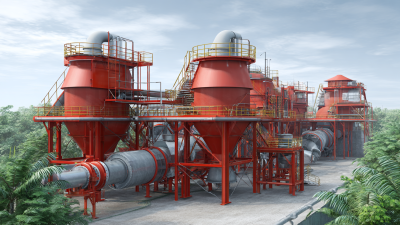
In the fast-changing world of gas production, desanding produced condensate has really become a key concern for operators who want to keep their plants running smoothly and be more eco-friendly. As gas fields develop, the methods for removing sand and tiny particles from condensate are getting more and more advanced. John Smith, a pretty well-known expert in the gas industry, highlights just how crucial this step is: “Getting rid of sand from produced condensate in gas fields isn't just a technical detail — it's vital for preserving our equipment and making sure the final products are top quality.”
Doing a good job with desanding isn’t just about protecting the machinery from damage caused by those abrasive particles. It also plays a big role in making gas operations more cost-effective. Looking ahead to 2025, we can expect some really exciting tech breakthroughs and best practices that will change the game. Innovations like improved filtration systems and real-time monitoring will help make desanding faster, more precise, and way more efficient — which, in turn, adds serious value to how we produce gas.
Plus, as the industry keeps pushing to be more environmentally responsible and sustainable, focusing on better desanding methods will only become more important. With ongoing research and teamwork across different stakeholders, we’re likely heading toward a future where these techniques don’t just improve operational results but also support broader goals like protecting the environment and making better use of resources.

Overview of Desanding Challenges in Gas Fields
The challenges associated with desanding produced condensate in gas fields have become increasingly significant as the industry faces rising production demands and the complexities of reservoir characteristics. One of the primary issues is the presence of sand and solid particulates, which can lead to equipment erosion, pipeline blockages, and reduced efficiency of processing plants. According to the National Petroleum Council, sand production can account for up to 50% of operational challenges in certain gas fields, particularly those tapped in high-pressure formations.
In 2025, gas operators will need to adopt innovative methods to mitigate these desanding challenges. Advances in separation technology, such as enhanced hydrocyclones and advanced filtration systems, are essential to remove fine particles effectively while maintaining flow rates. A recent study by the International Energy Agency (IEA) reported that integrating advanced analytics and real-time monitoring can increase desanding efficiency by up to 30%, ensuring smoother operation and lower maintenance costs. Additionally, tackling the issue of water cut in produced condensate will be vital, as excessive water can exacerbate sand-related problems and lead to increased compliance and treatment costs.
The complexity of reservoir geology also poses significant desanding challenges. Unconventional gas fields, which account for nearly 70% of global gas production, often experience fluctuating sand production rates due to stress changes during extraction. Addressing these fluctuations requires adaptive desanding strategies and a thorough understanding of the geological conditions in play. Research indicates that predictive modeling can provide valuable insights into when and where sand production may spike, enabling preemptive measures that can mitigate the impact on overall gas production systems.
Effective Techniques for Desanding Produced Condensate in Gas Fields in 2025 - Overview of Desanding Challenges in Gas Fields
| Technique |
Efficiency (%) |
Cost ($/m³) |
Challenges |
| Hydrocyclones |
90 |
1.50 |
Requires regular maintenance |
| Sand Filters |
85 |
2.00 |
Clogging issues with fine particles |
| Electrostatic Separation |
92 |
3.50 |
High energy consumption |
| Bag Filters |
80 |
1.75 |
Frequent filter replacement |
| Flotation Units |
95 |
4.00 |
Complex operation |
Importance of Desanding in Produced Condensate Management
Desanding is a critical process in the management of produced condensate in gas fields, especially as the industry moves towards more sustainable practices by 2025. The accumulation of sand and solid particles during the extraction and processing of hydrocarbons can lead to severe operational challenges, including pipeline blockages and equipment damage. According to recent industry reports, up to 30% of produced water from gas fields contains significant levels of sand, which can negatively impact both product quality and production efficiency. Effectively desanding condensate is not just a matter of operational safety but also crucial for maintaining the economic viability of gas field operations.
The importance of desanding in produced condensate management extends to environmental aspects as well. Efficient desanding techniques reduce the potential for sedimentation and contamination in treatment and disposal systems, thereby mitigating environmental risks. A 2023 study by the International Gas Union highlighted that implementing advanced desanding technologies could improve the removal efficiency of solids by as much as 95%, leading to a smoother flow of hydrocarbons and lower maintenance costs. As gas fields face increasing regulatory scrutiny, optimizing produced water treatment processes is becoming indispensable for compliance and sustainability, making desanding not just necessary but vital for the future of the gas industry.
Effective Techniques for Desanding Produced Condensate in Gas Fields in 2025
This chart illustrates the effectiveness of various desanding techniques used in gas fields for managing produced condensate. The data highlights the percentage removal efficiency of different methods, as observed in recent studies.
Innovative Technologies for Desanding in 2025
The desanding of produced condensate in gas fields is gaining increased attention as operators strive to optimize production efficiency and maintain environmental sustainability. By 2025, innovative technologies are expected to revolutionize the desanding process, emphasizing the need for effective separation and treatment mechanisms.
One key advancement is the integration of advanced filtration systems that utilize nanomaterials, which have demonstrated a significant ability to capture and remove fine sand particles. According to the latest industry report from the Society of Petroleum Engineers (SPE), these filtration technologies could reduce sand content in condensates by over 90%, enhancing the quality of the final product.
Moreover, the application of artificial intelligence and machine learning is set to play a critical role in predictive maintenance and real-time monitoring of desanding operations. By analyzing data from various field operations, these technologies can forecast potential desanding challenges and optimize processes accordingly.
A study published by the International Journal of Oil and Gas Technology indicates that AI-driven solutions can lead to a reduction in operational downtime by up to 30%, thereby improving overall productivity. As gas fields continue to evolve, investing in these innovative technologies for desanding will not only meet regulatory requirements but also advance the energy sector toward more sustainable practices.
Comparison of Mechanical and Chemical Desanding Methods
When it comes to desanding produced condensate in gas fields, comparing mechanical and chemical methods reveals distinct advantages and disadvantages for each approach. Mechanical desanding techniques often employ filtration and centrifugation to physically separate sand and solid particles from the condensate. These methods can be highly effective, especially in fields where the production rates are stable and the sand concentration is manageable. However, mechanical systems can be costly to maintain and may require frequent monitoring to ensure optimal performance.
On the other hand, chemical desanding methods utilize additives that enhance the separation of organic and inorganic materials from the condensate. These chemicals can change the properties of the fluid, allowing faster sedimentation of sand particles. While chemical methods can be advantageous in terms of operational simplicity, they may pose challenges in terms of compatibility with existing systems and potential long-term impacts on fluid quality.
**Tips:**
1. When selecting a desanding method, consider the characteristics of the condensate and the specific challenges presented by your gas field's conditions.
2. Regularly assess the performance of the chosen desanding method to identify any operational or economic limitations, ensuring the deliverables maintain quality standards.
3. Rather than relying solely on one technique, a hybrid approach that leverages both mechanical and chemical methods may yield optimal results.
Case Studies: Successful Desanding Implementations
In recent years, the challenge of desanding produced condensate in gas fields has gained significant attention, particularly as operators strive to enhance production efficiency and protect equipment integrity. Case studies from various gas fields illustrate the effectiveness of innovative desanding techniques.
For instance, a project in a North American gas field utilized a two-stage separation process that significantly reduced sand content from the produced condensate. The implementation of this approach not only improved equipment performance but also minimized downtime caused by sand-related issues.
Another case study highlights the use of inline filtration systems in a Middle Eastern gas field, where high sand inflow was a persistent problem. By integrating advanced filtration solutions, operators were able to achieve a dramatic decrease in sediment levels in the condensate stream.
The success of this method underscored the importance of adopting tailored desanding solutions that align with specific environmental conditions and production goals, ultimately leading to improved operational efficiency and reduced maintenance costs.
Future Trends in Desanding Technologies and Techniques
The desanding of produced condensate in gas fields is an increasingly critical process as the industry moves towards more efficient extraction methods. In 2025, future trends in desanding technologies will focus on automation and real-time monitoring systems. According to a report by the International Energy Agency (IEA), automated filtration systems can reduce operational costs by up to 30% while maintaining high efficiency in separating sand and particulates. This advancement will likely play a pivotal role in managing the challenges associated with sand production, which currently causes damage to over 50% of oil and gas production equipment, as highlighted by the Society of Petroleum Engineers (SPE).
Emerging techniques such as hydrodynamic separation and advanced membrane filtration are also garnering attention. A study published in the Journal of Petroleum Technology predicts that membrane technology could augment traditional desanding methods by providing a more compact and environmentally friendly solution, reducing water usage by nearly 40%. Moreover, the integration of machine learning for predictive maintenance and real-time data analysis will enhance operational efficiency, leading to fewer unexpected downtimes. As these trends unfold, the industry will likely witness a paradigm shift, moving towards more sustainable and effective desanding practices that align with global energy transition goals.
Best Practices for Operational Efficiency in Desanding Processes
In the evolving landscape of gas production, managing produced condensate effectively is crucial for optimizing operational efficiency. As per the 2023 Global Gas Production Report, the industry is projected to see an increase in condensate output by nearly 20% by the year 2025. This rise necessitates the implementation of advanced desanding techniques to mitigate the impact of sand and other particulates that can impair production systems. Effective desanding processes not only enhance equipment longevity but also improve the overall quality of the condensed hydrocarbons.
The best practices for operational efficiency in desanding include regular monitoring of sand content in produced fluids and the utilization of advanced filtration systems. Data suggests that employing multi-stage filtration can reduce sand-related downtime by up to 30%, resulting in significant cost savings. Additionally, integrating automated systems for real-time measurement and management can streamline desanding operations, reducing labor costs and improving response times to fluctuating sand loads. With the right combination of technology and proactive maintenance strategies, gas fields can ensure their condensate recovery processes are both efficient and sustainable, setting a benchmark for operational excellence in the industry.
FAQS
: Desanding is the process of removing sand and solid particles from produced condensate. It is important because accumulated sand can lead to pipeline blockages and equipment damage, impacting both product quality and production efficiency.
Up to 30% of produced water from gas fields can contain significant levels of sand, which poses operational challenges.
Efficient desanding reduces sedimentation and contamination risks in treatment and disposal systems, thereby mitigating environmental risks associated with hydrocarbon production.
By 2025, advancements such as advanced filtration systems utilizing nanomaterials and artificial intelligence for predictive maintenance and real-time monitoring are expected to revolutionize the desanding process.
Advanced filtration technologies have the potential to reduce sand content in condensates by over 90%, enhancing the quality of the final product.
Artificial intelligence can be used for predictive maintenance and real-time monitoring, helping to forecast potential challenges and optimize desanding processes.
AI-driven solutions can lead to a reduction in operational downtime by up to 30%, improving overall productivity in gas field operations.
As gas fields face increasing regulatory scrutiny, optimizing treatment processes is necessary for compliance and sustainability, making desanding vital for the future of the industry.
Efficient desanding techniques can lead to lower maintenance costs by ensuring smoother hydrocarbon flow and preventing equipment wear and blockages.
Effective desanding is crucial for maintaining the economic viability of gas field operations by enhancing production efficiency and ensuring safe operational conditions.
Conclusion
The article "Effective Techniques for Desanding Produced Condensate in Gas Fields in 2025" provides a comprehensive overview of the challenges faced in gas fields regarding the desanding of produced condensate. It emphasizes the critical importance of effective desanding in managing produced condensate, highlighting the detrimental effects that sand can have on production efficiency and equipment integrity.
Innovative technologies slated for 2025 are explored, comparing mechanical and chemical desanding methods to determine their effectiveness. Case studies demonstrate successful implementations of desanding techniques, showcasing practical applications and outcomes. Additionally, the article discusses future trends in desanding technologies and presents best practices that can enhance operational efficiency in desanding processes, ultimately underscoring the need for continued advancements in the desanding of produced condensate in gas fields.