strict management, quality first, quality service, and customer satisfaction

 You know, when it comes to making water treatment more efficient, the Hydrocyclone Separator has really become a game-changer in the oil and gas industry. I came across a recent report by Global Industry Analysts Inc., and it said that the market for these separators is expected to hit around $1.5 billion by 2026. That’s a pretty solid sign that folks are really banking on advanced separation tech nowadays. It’s actually quite impressive to see how much Shanghai Shangjiang Petroleum Engineering Equipment Co., Ltd. is pushing the envelope here—constantly developing new, cutting-edge cyclone products to keep up with what the industry needs.
I also read what Dr. John Tanner, a well-known expert in hydrocyclones, had to say. He mentioned, “Hydrocyclone Separators don’t just boost efficiency—they also cut down on waste big time, which makes them a must-have in modern water treatment setups.” That really rings true with the way Shanghai Shangjiang is dedicated to improving filtration and separation processes. They’re always working on delivering high-quality solutions that help companies run smoother and more efficiently. As the industry keeps evolving, I have no doubt that these improved hydrocyclone techs will keep setting the bar high for water treatment in oil and gas—that’s pretty exciting, don’t you think?
 Hydrocyclone separators play a crucial role in maximizing the efficiency of water treatment processes by enhancing solid-liquid separations while minimizing energy consumption. Recent studies focused on optimizing hydrocyclone designs, particularly those featuring innovative overflow slit structures, showcase significant advancements. These experiments and numerical simulations have demonstrated that such modifications can effectively reduce the energy requirements during the separation process, which has been a longstanding concern in hydrocyclone applications.
Moreover, the integration of customized water clarifiers complements hydrocyclone technology by further improving recovery rates and ensuring compliance with stringent discharge regulations. By decreasing the concentration of oil in water through the use of production chemicals, these clarifiers enhance waste management practices and contribute to a more sustainable water treatment approach. As industries continue to seek efficient and environmentally friendly solutions, the synergy between advanced hydrocyclone designs and tailored clarification systems will undoubtedly lead to better performance outcomes in water treatment.
: Hydrocyclones are primarily used to separate solid particles from liquids, enhancing sediment removal efficiency in water treatment processes.
Custom-designed hydrocyclones can achieve sediment removal efficiencies exceeding 90%, while traditional sedimentation methods typically max out around 60-70%.
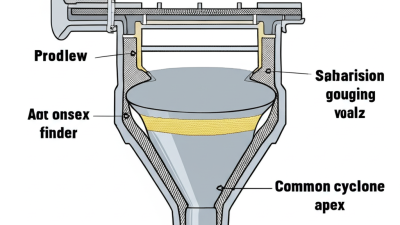
Key design parameters include inlet geometry, cone angle, and vortex finder length, which can be adjusted to improve sedimentation rates.
A two or three-stage configuration can enhance sediment removal efficiencies to upwards of 95%, making them more effective in water treatment.
Hydrocyclones can achieve up to 90% removal efficiency of suspended solids, reducing the load on downstream filtration systems and leading to cost savings in operational expenses.
These systems improve the capture of microfibers and maintain optimal flow rates, crucial for large-scale municipal treatment applications.
Hydrocyclones can achieve separation efficiency rates exceeding 90%, reduce waste volume by up to 50%, and improve operational efficiency in water treatment processes.
The company is recognized for continuously refining cyclone separation products and technologies to enhance the performance of hydrocyclones and meet evolving industry demands.
Vortex aeration enhances aeration efficiency, contributing to more sustainable wastewater treatment practices alongside hydrocyclone use.
The article "Unlocking Efficiency in Water Treatment with Hydrocyclone Separator Technology Insights and Performance Data" explores the significant role of Hydrocyclone Separators in enhancing water treatment processes. It begins by discussing how these separators can maximize efficiency by effectively removing sediments and impurities from water, thus outperforming traditional treatment methods. The understanding of operational parameters is crucial for achieving optimal performance, and the comparative analysis highlights their advantages over conventional techniques.
Furthermore, the article delves into the impact of Hydrocyclone design on sediment removal efficiency, supported by real-world case studies in municipal water treatment applications. It concludes by outlining key industry metrics for assessing the effectiveness of Hydrocyclone Separators, showcasing their potential in revolutionizing water treatment practices. With a focus on continuous development and improvement in cyclone separation technology, Shanghai Shangjiang Petroleum Engineering Equipment Co., Ltd. aligns with these insights, emphasizing their commitment to advancing separation and filtration equipment for various industries, including oil and gas.