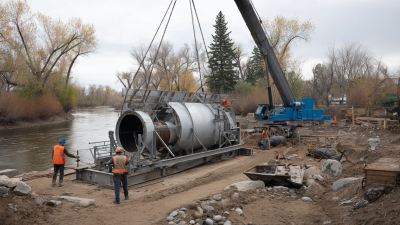
Hydrocyclone separators play a pretty important role in a bunch of industrial processes these days. Basically, they do a great job of separating solids from liquids, which is pretty cool. You’ll find these things everywhere—whether it’s in mining operations, wastewater treatment plants, or even in food production lines.
Getting to know the different types of hydrocyclone separators and what they’re used for is really worth your time. There’s not just one size fits all: some are designed to handle heavy sediment loads, while others are better suited for capturing those tiny, fine particles. Each kind has its own pros and cons, so it’s a bit of a balancing act.
As we dig into how these separators work, it’s a good idea to think about how efficient they really are. Picking the right one could make a noticeable difference in your operation’s efficiency. Plus, don’t forget about maintenance—skimping on that can really hurt performance. Hydrocyclone tech is always improving, so staying in the know about the different types is super important if you’re in the industry or just curious about how things work behind the scenes.

Types of Hydrocyclone Separators and Their Unique Features
Hydrocyclone separators are essential in various industries due to their efficiency in separating particles from liquids. There are several types of hydrocyclone separators, each designed for specific applications. The most common types include cylindrical, conical, and special shape hydrocyclones. Each design has unique features that cater to different separation needs.
Cylindrical hydrocyclones are well-known for their ability to handle larger flow rates. They are often used in mining and mineral processing. Their straight shape provides consistent performance. Conical hydrocyclones, on the other hand, excel in separating smaller particles due to their tapered design. This shape increases hydraulic efficiency, making them ideal for wastewater treatment and chemical processes.
Special shape hydrocyclones are customized for unique tasks. They might not be as mainstream, yet their tailored design can lead to significant improvements in separation performance. However, a poorly designed separator can lead to inefficient separation. Understanding the right type for specific needs is crucial. Sometimes, trial and error is necessary to find the most efficient solution.
Principles of Operation for Hydrocyclone Separators
Hydrocyclones are critical in various industrial applications, particularly in mineral processing and wastewater treatment. They operate based on centrifugal forces. A slurry is introduced tangentially into the cylinder of the hydrocyclone. This design creates a swirling motion, separating particles according to their density and size. The denser particles move outward and downward, while lighter ones rise to the top.
According to a recent industry report, hydrocyclones can achieve separation efficiency rates exceeding 90%. This efficiency reduces the need for additional filtration methods. However, challenges remain. Not all materials separate effectively in a hydrocyclone. The particle size distribution plays a significant role. Some lighter particles may not separate properly, leading to lower overall effectiveness.
Moreover, the wear and tear on hydrocyclone components can lead to operational issues. Regular maintenance is crucial to ensure optimal performance. Additionally, particle shape can influence separation. While hydrocyclones have many advantages, reliance solely on them is often insufficient. A deeper understanding of their limitations is necessary for improved designs and applications.
Hydrocyclone Separator Types and Applications
| Type |
Application |
Operating Principle |
Separation Efficiency |
| Conical Hydrocyclone |
Mining and Mineral Processing |
Utilizes centrifugal force to separate particles based on size and density. |
85% - 95% |
| Cylindrical Hydrocyclone |
Wastewater Treatment |
Separates solids from liquids using centrifugal motion. |
75% - 85% |
| Multi-Stage Hydrocyclone |
Oil and Gas Separation |
Employs multiple cyclones to increase the degree of separation. |
90% - 98% |
| Desanding Hydrocyclone |
Sand and Silt Removal |
Removes unwanted particles from the fluid stream through centrifugal forces. |
80% - 90% |
Common Applications of Hydrocyclone Separators Across Industries
Hydrocyclone separators play a vital role across various industries. In mining, they are used for separating fine particles from slurries. This application is crucial for improving the efficiency of mineral extraction. It helps in enhancing the quality of final products while reducing waste. However, the efficiency of separation can vary based on factors like inlet velocity and particle size.
In the oil and gas sector, hydrocyclone separators are used for liquid-liquid separation. They help to remove unwanted water from oil before processing. This separation is essential to meet quality standards. Yet, achieving the perfect separation requires constant monitoring. The oil’s characteristics can affect performance, leading to the need for adjustments.
In wastewater treatment, hydrocyclones help remove solids from liquids. They can improve clarity in effluent streams. This application is necessary for environmental compliance. Although effective, sometimes they struggle with sticky or fibrous solids. These can clog the system, requiring maintenance and design tweaks. The importance of understanding applications cannot be overstated; it shapes the overall effectiveness of hydrocyclone separators.
Factors Influencing the Performance of Hydrocyclone Separators
Hydrocyclone separators are crucial in various industries. Their efficiency depends on several factors. The diameter of the cyclone plays a significant role. A larger diameter can handle higher flow rates. However, it may decrease separation efficiency for smaller particles.
The inlet velocity is also important. High velocities create better particle classification. Yet, if the flow is too fast, it may lead to vortexing. This results in poor separation outcomes. Monitoring the pressure drop is essential as well. A consistent pressure drop indicates proper operation.
Tips: Always check the wear patterns. This can reveal if the hydrocyclone is functioning correctly. Regular maintenance can prevent costly downtimes.
Another factor to consider is the feed density. High density can improve separation efficiency. Yet, there is a limit. Excessively dense feeds can clog the cyclone. Experimenting with different feed characteristics is beneficial. You might discover optimal conditions that enhance performance.
When setting up a hydrocyclone, pay attention to the tailings. Their composition can affect your overall process. Aim for a balance between recovery and purity. Adjust as needed, based on observed results.
Hydrocyclone Separator Performance Factors
This chart illustrates the various factors influencing the performance of hydrocyclone separators, including feed pressure, particle size, and flow rate.
Maintenance and Optimization of Hydrocyclone Separator Efficiency
Maintaining and optimizing hydrocyclone separators is crucial for achieving maximum efficiency in various industrial processes. Regular maintenance ensures consistent performance and minimizes downtime. Studies show that efficient operation can achieve separation efficiencies exceeding 90% in certain applications, such as mineral processing. However, common issues like wear and clogging can hinder performance.
Routine inspection of components can identify wear patterns. This is vital in preventing significant failures. For instance, the wear rate can be influenced by the type of material being processed. Operators often overlook this aspect. Regular cleaning and preventive maintenance may increase treatment capacity by 20-30%, according to some industry reports. Investing in training for operators is equally important. Knowledgeable staff can adjust parameters to respond to changing conditions, improving overall efficiency.
Understanding the optimal operating conditions of hydrocyclones is essential. Parameters such as and flow rate directly impact separation performance. Data suggests misaligned conditions can lead to inefficiencies. Slight adjustments in these parameters can lead to different outcomes. Sometimes, operators hesitate to alter settings due to uncertainty. Accurate monitoring technology can guide necessary changes, enhancing performance and reducing wear over time.
Comparative Analysis of Hydrocyclone Separator Designs and Technologies
Hydrocyclone separators are essential tools in various industries. They efficiently separate particles from liquids and slurries. These devices utilize centrifugal forces to achieve separation. Different designs offer varying efficiencies and capacities. It's crucial to select the right type for a specific application.
Comparing hydrocyclone designs reveals unique advantages. Some models excel in mineral processing, while others perform well in wastewater treatment. The shape and dimensions of each hydrocyclone can impact performance. A taller design may enhance separation, but might also increase pressure drop. Efficiency often comes at the cost of increased complexity. Testing and fine-tuning specific configurations is vital.
Understanding the limitations of each design is equally important. Certain separators may struggle with fine particle separation. Others can be less effective under varying flow rates. The choice of material also affects durability and maintenance. Regular assessments can help identify areas for improvement. A thoughtful approach is necessary for optimal performance in any application.
Future Trends in Hydrocyclone Separator Development and Innovation
The future of hydrocyclone separators looks promising, with significant advancements on the horizon. Innovations in materials are making these devices more resistant to wear and corrosion. Enhanced computational models can now predict performance more accurately. This allows engineers to design hydrocyclones that optimize separation efficiency.
Smart technology integration is another trend. Real-time monitoring systems will provide valuable data on flow rates and particle sizes. Predictive maintenance can reduce downtime. However, the challenge lies in ensuring this technology is user-friendly. Many operators may struggle with complex systems. Education will be key in overcoming this hurdle.
Sustainability is also shaping future developments. Eco-friendly designs are emerging, aiming to reduce energy consumption. While these innovations are exciting, there is a risk of overselling their benefits. Not every facility will benefit equally from new technologies. Balancing innovation with practical application is essential for success.
FAQS
: The content explores various themes related to health and wellness. It provides insights into improving daily habits.
Start with small changes. Drink more water and take short breaks during work. Small steps matter.
Yes, practice mindfulness and engage in hobbies. Connecting with friends also boosts mood. Activities like journaling help too.
Absolutely, regular exercise enhances mood and energy. Even a daily walk can improve well-being significantly.
Focus on whole foods, fruits, and vegetables. Try to reduce processed foods. Balance is key for nutrition.
Establish a bedtime routine. Minimize screens before sleep and create a calm environment. Reflect on daily stresses too.
Staying hydrated is crucial for overall health. Water improves focus and helps prevent fatigue. Listen to your body.
Yes, social connections boost happiness. Have regular chats with friends or family. It’s okay to feel lonely sometimes.
Long-term goals can provide direction. However, focus on short-term achievements too. Celebrate small victories.
Identify stressors and find coping methods. Try breathing exercises or meditation. Reflecting can sometimes reveal deeper issues.
Conclusion
The article "Hydrocyclone Separator Types and Applications Explained" provides an in-depth look at hydrocyclone separators, exploring various types and their distinct features. It delves into the operational principles that govern these separators, explaining how they utilize centrifugal forces to effectively separate materials based on density. The article highlights the common applications of hydrocyclone separators across different industries, such as mining, wastewater treatment, and oil recovery, showcasing their versatility.
In addition to discussing factors that influence the performance of hydrocyclone separators, the article emphasizes the importance of maintenance and optimization techniques to enhance efficiency. A comparative analysis of different designs and technologies sheds light on the innovations shaping the future of hydrocyclone separators. Overall, the article serves as a comprehensive guide for understanding the significance and functionality of hydrocyclone separators, along with emerging trends in their development.