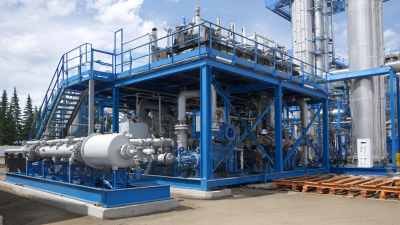
Hey there! So, the upcoming 2026 Canton Fair is shaping up to be a real eye-opener, especially when it comes to new breakthroughs in Oil, Gas, Water, and solids separation tech. It’s happening from April 15th all the way through May 5th, and it’s going to pull together a bunch of industry leaders and innovators—people who are really pushing the envelope. Exhibitors will be showing off some pretty incredible solutions aimed at making resource separation more efficient and eco-friendly, which is pretty exciting.
With industries worldwide feeling the heat to streamline their processes, new separation tech is more important than ever. A lot of companies that focus on Oil, Gas, Water, and solids separation will be demoing fresh methods and equipment designed to tackle ongoing challenges. For example, some of the latest filtration techniques might really boost water treatment and oil recovery efforts. Plus, you’ll see a bunch of solutions that incorporate AI to make operations smoother and more effective.
That said, let’s not forget—these technologies are still a work in progress. Many products you see might have some limitations, and there’s always room for improvement. But the conversations, networking, and potential partnerships happening at the fair could lead to some pretty big breakthroughs. It’s a great chance for folks to reflect on where the industry’s headed and figure out what still needs fixing in their separation processes. All in all, it’s an event worth keeping an eye on!
Emerging technologies in oil, gas, water, and solids separation are revolutionizing industries. The global market for these technologies is expected to reach $26 billion by 2026, according to recent industry reports. Innovative methods in separation processes are essential for enhancing efficiency. They also help reduce environmental impacts.
One promising development is membrane technology. Membranes can separate contaminants effectively. They usually offer a smaller footprint compared to traditional methods. Another trend is the use of electrochemical processes. These processes can significantly reduce energy consumption while increasing separation performance. However, the high initial investment remains a hurdle for many companies.
Data indicates that 60% of firms struggle with adopting new separation technologies. They often lack proper training and resources. There’s also a gap in understanding the long-term benefits of these technologies. Companies must reassess their strategies to overcome these challenges. Embracing continuous innovation is vital for success in this competitive landscape. The 2026 Canton Fair will likely showcase advancements. Expect to see new solutions aimed at tackling existing inefficiencies.
The 2026 Canton Fair highlights exciting innovations in oil, gas, water, and solids separation methods. Various techniques caught the eye of industry professionals. Advanced filtration and sedimentation technologies are making waves at the fair. These methods promise to enhance efficiency and reduce waste.
Visitors experienced live demonstrations of cutting-edge separation processes. Some techniques showed great promise, while others seemed less effective. This stark contrast invites reflection on what truly works in practical scenarios. Industry experts recommend considering both the latest innovations and traditional methods before making decisions.
Explore new ideas, but don’t overlook proven solutions. Evaluate your needs and challenges critically. Engaging with peers can open new perspectives on these separation methods. Take the time to ask questions and gather insights. Balancing innovation with practicality is key for future success in this field.
At the 2026 Canton Fair, separation technologies will reflect significant adaptation to environmental regulations. These regulations are driving innovation in oil, gas, water, and solids separation solutions. According to a recent industry report, compliance with tighter environmental policies has increased demand for advanced separation methods by 30% over the last five years. Companies are exploring solutions that not only meet these standards but also enhance their operational efficiencies.
One trend gaining traction is the use of membrane technologies. These methods are versatile and can address various separation challenges. Membrane systems can reduce energy consumption by up to 40%. However, they also face challenges such as fouling and limited lifespan. Engineers are continuing to refine these technologies, seeking ways to improve durability and performance while ensuring regulatory compliance.
**Tip:** Consider integrating sustainable practices into your separation processes. This can improve both compliance and efficiency. Staying proactive can yield long-term benefits. Another option is to engage in collaborative projects with research institutes. Sharing knowledge can lead to breakthroughs that benefit the entire industry. It's necessary to evaluate both successes and hurdles in implementing new technologies to drive further advancements.
The 2026 Canton Fair will showcase a range of innovative solutions in oil, gas, water, and solids separation. Key players in this industry are evolving rapidly. They are embracing advanced technologies that enhance efficiency and effectiveness in separation processes. According to a recent industry report, the global market for separation technologies is projected to reach $25 billion by 2026, driven by ongoing investment in cleaner production methods.
Some companies are focusing on membrane technologies, which show promise for water treatment. These can separate contaminants with high precision. Others are investing in centrifugation methods for oil and gas applications, providing faster processing times. However, not all solutions are foolproof. Some players struggle with scalability and cost-effectiveness, casting doubt on their long-term viability.
Reactive approaches are also gaining traction. Several participants are harnessing AI and machine learning to optimize separation processes. This aspect is still evolving. It shows how industry leaders must better integrate new technologies into existing systems. The challenge lies in ensuring that these advanced methods comply with environmental regulations while achieving economic feasibility.
The separation of oil, gas, water, and solids is crucial for many industries. At the 2026 Canton Fair, innovative separation technologies will take center stage. These technologies address the growing need for efficient resource management. Companies are under pressure to minimize waste and lower costs. As regulations tighten, adaptation becomes essential.
One key trend is the shift towards automation in separation processes. This reduces human error and increases efficiency. However, not all companies have access to advanced automation. Some still rely on traditional methods, which can lead to inefficiencies. The gap between those with advanced technology and those without may widen.
Sustainability drives many innovations. Equipment designed for better resource recovery is gaining traction. New designs focus on energy savings and reduced emissions. However, the high upfront costs can be a barrier for smaller players. Many are left wondering how to keep up in this fast-evolving sector. The need for continuous learning and adaptation remains real. The fair will highlight the importance of collaboration in overcoming these challenges.
The Canton Fair in 2026 will showcase innovative trends in oil, gas, water, and solids separation. Many case studies will highlight successful applications of separation technologies. For instance, one notable case involves a facility that improved its efficiency by adopting advanced filtration systems. These systems reduced contaminants dramatically, yet some challenges remained in scaling the technology.
Another interesting example is the use of centrifuges in liquid-solid separation. They proved beneficial in removing heavy solids from wastewater. Operators often noted the efficiency gains, but they also faced maintenance issues. Regular upkeep is critical to ensure uninterrupted operation, yet many facilities underinvest in this area.
Attendees will see real-world applications and the struggles that come with them. Sharing stories of both successes and setbacks can inspire industry professionals. It creates a sense of community around shared challenges. Engaging openly about what works—and what doesn't—sets the stage for future innovations.
The separation of oil, gas, and water is evolving. Innovative technologies are emerging to tackle this challenge. The 2026 Canton Fair will showcase these advancements. Industry experts predict a rise in demand for efficient separation solutions. This trend reflects the growing need for sustainability in resource management.
Advanced membrane technologies are gaining attention. These systems can selectively filter materials based on size and composition. Their efficiency may reduce waste and improve recovery rates. However, scalability remains a concern. Not every design will work in diverse environments. This calls for ongoing research and development.
Another area of focus is eco-friendly chemical processes. These methods aim to minimize environmental impact. Using biodegradable agents could enhance separation while reducing toxicity. Yet, effectiveness must be validated in real-world conditions. There is a risk of overpromising results. Ensuring reliability will be key to gaining industry trust.
| Separation Technology | Efficiency (%) | Cost ($/barrel) | Environmental Impact | Market Trend |
|---|---|---|---|---|
| Centrifugal Separation | 95 | 2.50 | Low | Growing |
| Membrane Filtration | 90 | 3.00 | Moderate | Stable |
| API Gravity Separation | 85 | 1.80 | Low | Declining |
| Electrocoagulation | 92 | 2.20 | Moderate | Emerging |
| Heat Exchange Separation | 88 | 2.80 | Low | Growing |
: They include membrane technology and electrochemical processes for better efficiency and lower environmental impact.
Membranes can effectively separate contaminants and take up less space than traditional methods.
They reduce energy consumption and improve separation performance, but can require high initial costs.
Sixty percent of companies lack training, resources, and understanding of long-term benefits.
They need to reassess strategies and embrace continuous innovation to stay competitive.
Automation in processes, sustainability, and the need for efficient resource management are key drivers.
High upfront costs for new technologies can prevent smaller firms from advancing.
Companies must adapt to tighter regulations, aiming to minimize waste and reduce costs.
It showcases innovative technologies and emphasizes collaboration to tackle existing inefficiencies.
The fast-evolving nature of the industry means firms must constantly adjust to stay relevant.
The article "Top Oil Gas Water Solids Separation Trends at 2026 Canton Fair" provides an insightful overview of the latest advancements and trends in Oil/Gas/Water/Solids Separation technologies. It highlights emerging technologies that are transforming separation methods, showcasing innovative solutions that address the challenges faced by the industry. The impact of environmental regulations on these technologies is underscored, as companies strive to comply with stricter guidelines while improving efficiency and sustainability.
Furthermore, the article discusses key industry players contributing to the evolution of separation solutions and analyzes market trends driving the development of advanced separation equipment. Case studies emphasize successful applications in various sectors, illustrating the practical benefits of these technologies. Looking ahead, predictions for the future directions of Oil/Gas/Water/Solids Separation technologies suggest a continued focus on innovation and environmental responsibility, paving the way for a more sustainable future in resource management.