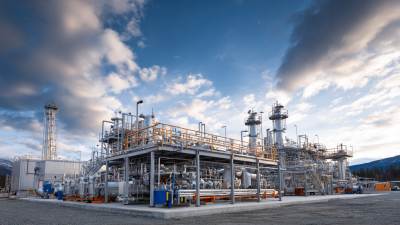
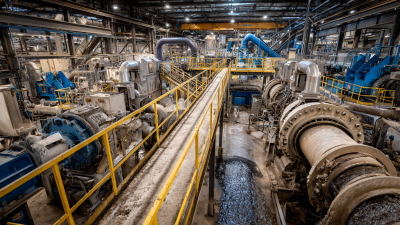
When it comes to pre-compressor natural gas desanding, industry folks have some pretty valuable insights. For example, John Smith from Energy Solutions Corp, who’s pretty well-known in the field, mentioned that “Effective desanding helps cut down operational risks and boosts efficiency.” It’s a reminder of just how crucial good sampling and analysis are before starting the compressor process.
Managing sand and other tiny particles is no joke — it’s a big challenge. As natural gas production picks up, it’s more important than ever to have solid desanding solutions in place. There are quite a few options out there, each promising to optimize efficiency. But here’s the thing: not every method fits every situation. The success of each one really depends on the specific operational setup and infrastructure you have.
Getting a grip on these solutions isn’t just about knowing the tech stuff. It’s also about being willing to adapt and tweak your processes as you go. Choosing the right pre-compressor desanding techniques can save you money and improve how things run overall. Still, it’s important for organizations to stay on top of new technologies and innovations in this fast-changing field — because what works today might get superseded tomorrow.
Natural gas desanding is crucial in pre-compressor systems. Sand and solid particles can damage compressors. Protecting the machinery improves its lifespan and efficiency. These systems must reliably filter out contaminants. Failing to do so can lead to costly downtime and repairs. Operators should regularly check for sand accumulation.
Effective desanding solutions vary greatly. Cyclone separators are commonly used. They work by creating a vortex that separates solids. However, they may miss finer particles. Other methods involve hydrocyclones, which use centrifugal forces. These can be more efficient but may require more maintenance.
The choice of the right solution often depends on the specific conditions of the gas stream.
Monitoring and maintenance are key. Regular inspections help identify issues early. Yet, many operators overlook this aspect. They may assume systems run smoothly without checks. Ignoring this can lead to larger issues down the line. Continuous improvement in desanding processes is essential. Operators need to reflect on their methods and adopt new technologies.
Effective desanding solutions are crucial in natural gas processing. They remove solid particles that can lead to equipment wear and inefficiencies. According to a recent industry report, about 70% of natural gas wells face issues related to sand production. This can significantly impact overall production rates. The accumulated sand can block pipelines and damage compressors, leading to costly downtime.
In addition to equipment longevity, effective desanding improves product quality. High sediment levels can degrade gas quality, resulting in compliance violations. A study revealed that poorly managed sand control can result in a 15% revenue loss due to product rejection. The cost of implementing reliable desanding solutions may seem high initially. However, when factoring in the potential losses from equipment failure, it becomes clear that the investment is prudent.
While many operators are aware of these problems, only a few take proactive measures. Many desanding methods show varying levels of success. For instance, the effectiveness of filtration systems often relies on specific operating conditions. This inconsistency means operators must continuously assess their strategies. Effective data collection and analysis are essential. Without ongoing evaluation, operators risk facing unexpected challenges in natural gas processing.
Natural gas desanding is essential prior to compression. Removing solid impurities improves efficiency and extends equipment life. A recent report indicates that nearly 30% of pipeline failures stem from sand and solid particulates. The consequences can be costly. Thus, implementing effective desanding solutions is crucial for operators.
Technologies for desanding vary. Cyclonic separators are popular. They leverage centrifugal forces to remove larger particles effectively. A study shows they can achieve a sand removal efficiency of up to 95%. However, they may not capture finer particles. This limitation can lead to wear and tear on compressors over time.
Another method is the use of hydrocyclones. These devices function similarly to cyclonic separators but work better with smaller sediments. Some reports indicate that hydrocyclones can improve capture efficiency significantly. Nevertheless, they require careful monitoring. Any change in the flow rate can impact performance. An ongoing challenge is optimizing these technologies to ensure reliability across diverse operational conditions.
| Technology | Efficiency (%) | Operating Temperature (°C) | Maintenance Frequency (months) | Estimated Cost (USD) |
|---|---|---|---|---|
| Cyclonic Separators | 85 | -10 to 50 | 6 | 20,000 |
| Multicyclone Units | 90 | -20 to 60 | 12 | 15,000 |
| Sand Filters | 75 | 0 to 40 | 3 | 10,000 |
| Membrane Separators | 80 | -5 to 45 | 6 | 25,000 |
| Gravity Settlers | 70 | -10 to 30 | 12 | 8,000 |
In the natural gas industry, the need for effective desanding solutions is evident. Pre-compressor desanding systems play a vital role in maintaining equipment efficiency. These systems reduce the quantity of sand and solid particles entering compressors, which can lead to wear and tear. A comparative analysis reveals several noteworthy approaches to this pressing issue.
One promising solution involves hydrocyclones. They separate sand from gas using centrifugal force. They are efficient but can struggle with varying flow rates. Another technology utilizes filters. While filters are effective in trapping particles, they can become clogged and require regular maintenance. This can be a downside in high-volume operations.
Meanwhile, advanced separators demonstrate significant effectiveness in desanding, yet are often complex. Their installation and operation can be challenging. Each method has strengths and weaknesses worth examining. Operator experience plays a crucial role in determining the best system for specific needs. While progress has been made, ongoing reflection is essential to refine these technologies. Balancing efficiency and maintenance is critical for improved outcomes.
This chart compares the effectiveness of various pre-compressor natural gas desanding solutions based on their sand removal efficiency and operational costs. The data represents the performance measured across five different solutions.
Natural gas desanding is crucial for operational efficiency. However, numerous challenges arise during its implementation. Particle contamination can cause wear and tear in equipment. In fact, studies estimate that up to 20% of compressor failures are linked to solid particles in gas streams. This raises alarms for natural gas operators.
Effective desanding requires advanced technologies. Yet, high initial costs deter many operators. According to a recent industry report, nearly 50% of companies cite budget constraints as a reason for not adopting desanding solutions. Additionally, the fluctuating nature of gas composition complicates the design of desanding systems. Operators often struggle to achieve optimal performance without extensive trial and error.
Training personnel is another hurdle. Without proper knowledge, even the best systems can underperform. Surveys show that 30% of maintenance teams lack adequate training on desanding equipment. This gap in knowledge can lead to inefficient operations and increased downtime. Addressing these challenges requires a multifaceted approach. Investing in both technology and training will be key to overcoming obstacles in desanding processes.
Natural gas desanding technologies are evolving rapidly. The current trends focus on enhancing efficiency and reducing costs. New techniques integrate advanced filtration methods. They promise improved separation of solid particles from gas streams. This is critical because contaminants can damage equipment down the line. Companies are looking for solutions that are not only effective but also economically viable.
Emerging technologies are exploring the use of nanomaterials. These materials can provide finer filtration without sacrificing flow rates. However, there are challenges. Cost and availability of these materials can be obstacles. Research is ongoing, but results can sometimes be inconsistent. The industry remains cautious as it tests these innovations during real-world applications.
Another trend involves automation and real-time monitoring. Sensors can now provide instant feedback on desanding efficiency. This leads to better operational adjustments. However, integrating these systems can be complex. Proper training and upkeep are vital to prevent issues. It’s a delicate balance, as human error can still pose risks. Finding that perfect solution is an ongoing journey for many in the gas sector.
In the world of natural gas processing, effective desanding can significantly enhance system performance. Many companies have tailored desanding solutions to meet specific challenges. A notable case involved a mid-sized operator who faced severe pipeline corrosion due to sand accumulation. They implemented a specific separation technology, achieving a remarkable reduction in sand-related failures. This not only prolonged equipment life but also improved operational efficiency.
Another case showcased a large facility that struggled with fluctuating sand levels. They turned to a combination of cyclone separators and filtration systems. The initial results were promising; however, they later discovered the need for regular maintenance. Neglecting this resulted in clogging and reduced effectiveness. Balancing performance with maintenance is crucial.
**Tips:** Regularly assess your desanding system. Small adjustments can yield significant benefits. Always consider the long-term effects of your chosen technology. Involve your team for a comprehensive review. Seeking outside expertise can provide new insights.
: Practice consistently. Take time every day. Find resources that suit your learning style.
Set clear goals. Track your progress. Celebrate small achievements. Surround yourself with supportive people.
Prioritize tasks daily. Use lists or apps to stay organized. Avoid multitasking. Focus on one task at a time.
Fear of failure is common. Sometimes, we lack self-discipline. Reflect on your progress regularly to grow.
Find a quiet space. Limit distractions by turning off notifications. Practice mindfulness techniques.
Feedback is essential. It provides different perspectives. Accept criticism gracefully and use it to improve yourself.
It's normal to face difficulties. Reflect on what went wrong, and adjust your approach. Resilience is key.
Yes, a routine provides structure. It can boost productivity. However, be flexible and adjust as needed.
Communicate openly. Listen actively. Spend quality time together. Trust takes time to develop and nurture.
Take a step back. Break tasks into smaller parts. Don’t hesitate to seek support from friends or family.
The article "Top 5 Pre-compressor Natural Gas Desanding Solutions" provides a comprehensive overview of the critical requirements for desanding natural gas prior to compression. It highlights the importance of effective desanding solutions in optimizing natural gas processing, thereby enhancing system efficiency and reliability. The discussion includes an analysis of the top technologies available for pre-compressor natural gas desanding, emphasizing their respective benefits and effectiveness.
Moreover, the article presents a comparative analysis of various pre-compressor desanding systems, addressing the challenges faced during implementation. Future trends in desanding technologies are also explored, alongside case studies showcasing successful desanding implementations in the field. This thorough examination underscores the necessity of adopting robust pre-compressor natural gas desanding solutions to ensure optimal operation within natural gas processing systems.