
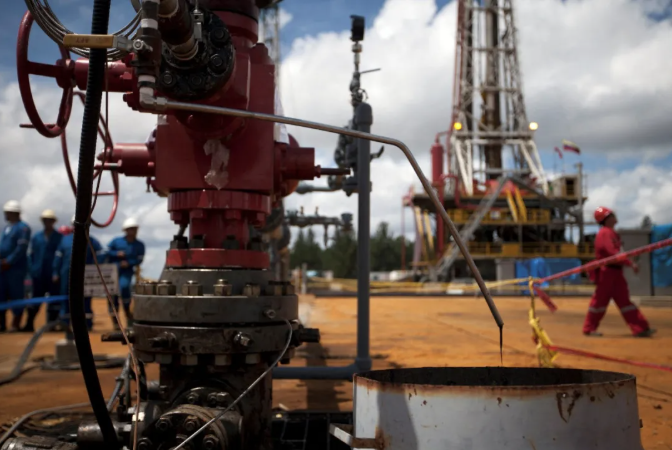
Venezuela has 90% of its proven oil reserves in the form of extra-heavy crude, which signifies major market opportunities for thermal recovery technologies and equipment, drilling
and completion technologies and equipment suitable for heavy oil, as well as heavy oil upgrading technologies and equipment.
I. Thermal Recovery Technologies and Equipment
Venezuela’s oil reserves are predominantly heavy crude, mainly located in the Orinoco Belt. The key to extracting heavy oil from this region lies in reducing crude viscosity and
enhancing flowability. Steam Stimulation and Steam Flooding are the primary thermal recovery methods. Venezuela began Steam Stimulation trials as early as the 1960s in fields
like Mene Grande, achieving recovery rates exceeding 25%.
Core thermal recovery equipment includes:
• Large-scale Steam Generators: Required for continuous production of high-temperature, high-pressure steam, involving significant capital investment and high operational costs.
• Steam Injection Boilers: High-pressure steam injection equipment tailored for heavy oil characteristics.
• Thermal Wellhead Assemblies: Special wellhead equipment resistant to high temperatures and pressures.
• Produced Fluid Treatment Systems: Integrated processing facilities for separating steam, crude oil, and water.
Heavy oil extraction in Venezuela requires substantial natural gas or fuel oil to power steam generators. With the aging local natural gas infrastructure, the efficiency of steam generators and the security of fuel supply have become critical challenges.
II. Drilling and Completion Technologies and Equipment
Drilling in the heavy oil belt faces specific technical challenges:
• Extended-reach drilling technology for shallow formations (burial depth of 800-900 meters)
• Sand control completion technology (for unconsolidated sandstone reservoirs)
• Horizontal and multilateral well drilling and completion technologies
• High-temperature resistant cement slurry systems
Due to limited investment in the petroleum sector during the 1990s, Venezuela lacks competitive oilfield service teams and petroleum machinery equipment, with a significant
portion of drilling and completion equipment being severely aged. Reports indicate there are currently 117 drilling rigs in the Orinoco Heavy Oil Belt, but issues of equipment aging
and lagging technological updates are prominent.
III. Heavy Oil Upgrading Technologies and Equipment
Venezuela currently has four extra-heavy crude upgrading plants, employing coking as the core process to convert extra-heavy oil into light synthetic crude. Key equipment
includes:
• Delayed coking units
• Residue hydrotreating equipment
• Upgrading process towers
• Heavy oil transfer pump sets
A particular characteristic of Venezuelan heavy oil is its high asphaltene and vanadium content, posing special requirements for the upgrading process. Research on the application of high-vanadium petroleum coke in aluminum production shows that Venezuelan heavy oil coke can still be used in the aluminum industry under high vanadium conditions but requires special treatment processes.
IV. Enhanced Oil Recovery (EOR) and Injection Equipment
Maintaining production in heavy oil wells requires extensive stimulation measures:
• Fracturing equipment (particularly large-scale hydraulic fracturing and steam fracturing)
• Sand control operation equipment
• Chemical flooding agent injection systems
• High-pressure pumping and injection equipment
Halliburton, as a global leader in fracturing services, possesses significant technological advantages in the heavy oil stimulation sector with its large-scale fracturing fleets and pumping equipment.
V. Surface Gathering, Transportation, and Storage Equipment
Pipeline transportation of Venezuelan heavy oil faces challenges of high viscosity and high pour point, necessitating:
• Oil-gas multiphase transportation equipment
• Pipeline heating systems
• Large-scale storage tanks
• Diluent blending facilities
As Venezuela needs to import light crude oil to blend with domestic heavy oil for export (as diluted bitumen), diluent storage and transportation facilities are also a key investment direction.
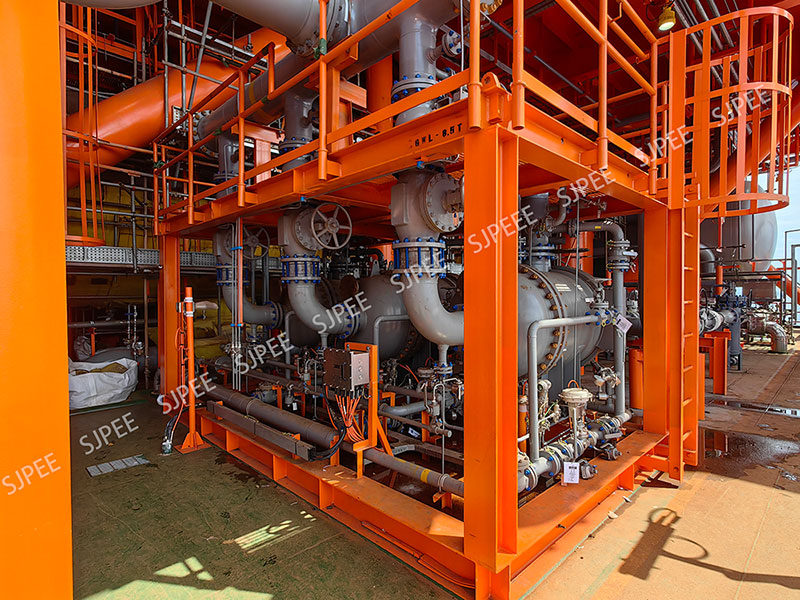
The extraction of oil and natural gas cannot be achieved without separation equipment.
Shanghai Shangjiang Petroleum Engineering Equipment Co., Ltd. established in Shanghai in 2016, is a modern technology enterprise integrating R&D, design, production, and service. We are dedicated to developing separation and filtration equipment for the oil, gas, and petrochemical industries. Our high-efficiency product portfolio includes de-oiling/dewatering hydrocyclones, desanders for micron-sized particles, and compact flotation units. We provide complete skid-mounted solutions and also offer third-party equipment retrofitting and after-sales services. Holding multiple proprietary patents and operating under a DNV-GL certified ISO-9001, ISO-14001, and ISO-45001 management system, we deliver optimized process solutions, precise product design, strict adherence to engineering specifications, and ongoing operational support.
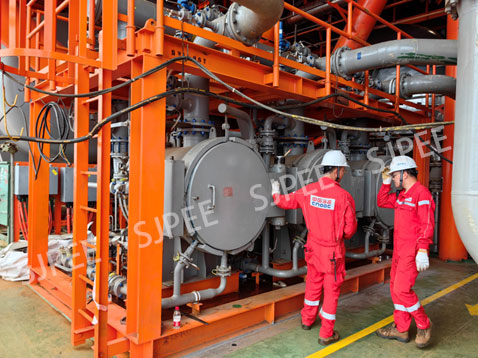
Our high-efficiency cyclone desanders, renowned for their exceptional 98% separation rate, have earned recognition from international energy leaders. Constructed with advanced wear-resistant ceramics, these units achieve 98% removal of particles as fine as 0.5 microns in gas streams. This capability enables the reinjection of produced gas for miscible flooding in low-permeability reservoirs, a key solution for enhancing oil recovery in challenging formations. Alternatively, they can treat produced water, removing 98% of particles larger than 2 microns for direct reinjection, thereby boosting water-flood efficiency while minimizing environmental impact.
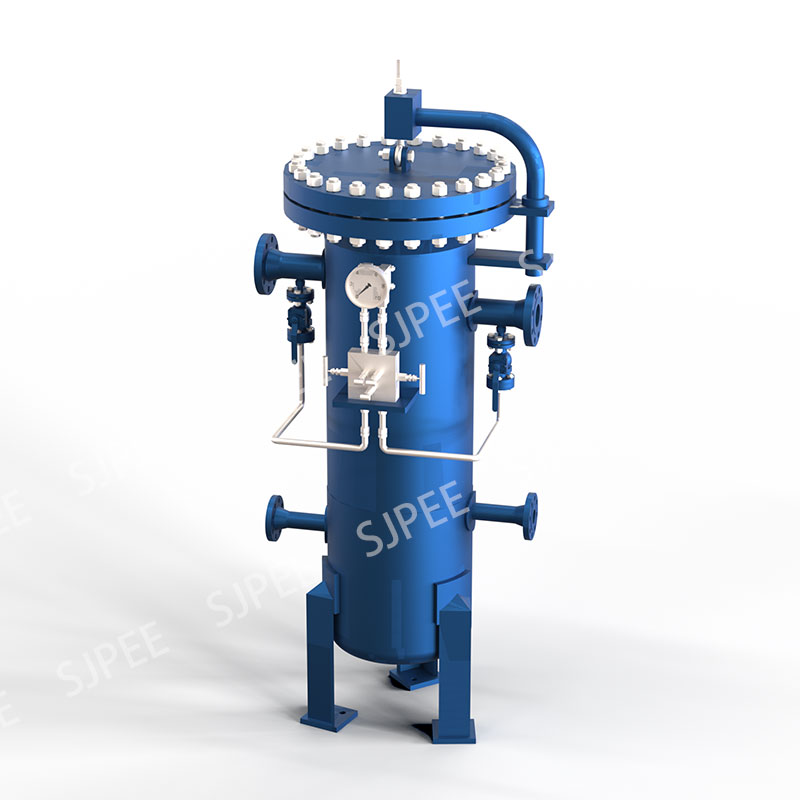
Our new product——The High Efficiency Ultra-Fine Particle Desander is a liquid-solid separation device that utilizes an efficient centrifugal principle to separate suspended impurities—such as solids in produced water, seawater, condensate, fine particles in high-viscosity liquids, and catalyst powder in reactors—from fluids (liquids, gases, or gas-liquid mixtures). It effectively removes solid particles with sizes down to 2 microns (at 98% efficiency) or smaller.
The High Efficiency Ultra-Fine Particle Desander delivers high sand removal efficiency, capable of removing solid particles down to 2 microns. The equipment features a compact footprint, requires no external power or chemical additives, and has a service life of approximately 20 years. It offers online sand discharge capability without the need for production shutdown.
Proven in major global fields operated by CNOOC, CNPC, Petronas, and others across Southeast Asia, SJPEE desanders are deployed on wellhead and production platforms. They provide reliable solids removal from gas, well fluids, and condensate, and are critical for seawater purification, production stream protection, and water injection/flooding programs.
Beyond desanders, SJPEE offers a portfolio of acclaimed separation technologies. Our product line includes membrane systems for natural gas CO₂ removal, deoiling hydrocyclones, high-performance compact flotation units (CFUs), shale gas desanding,Cyclonic dewater package with produced water treatment,and multi-chamber hydrocyclones, delivering comprehensive solutions for the industry’s toughest challenges.
Post time: Jan-29-2026