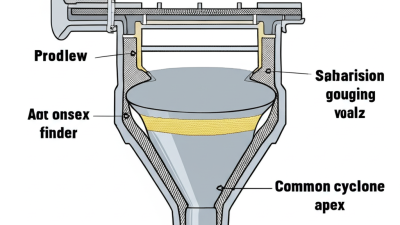
Choosing the right hydrocyclone can feel pretty overwhelming, honestly. With so many designs and specs out there, it’s really important to make an informed decision. These things are honestly pretty crucial in a bunch of industries—they separate stuff based on density, giving you a pretty efficient way to handle mixtures of liquids and solids.
The key is understanding exactly what you need. Are you after super high separation efficiency, or do you need something tough and durable? Every application’s a bit different. Like, in mining, they use hydrocyclones a lot for sorting particles by size, while in oil and gas, the focus might be more on separating solids from liquids.
From experience, I’ll tell you—picking a hydrocyclone isn’t just about grabbing whatever looks good. You’ve gotta think about flow rates, pressure drops, and whether the materials are compatible with what you’re working with. Mess this up, and you could end up with lower efficiency and higher costs. So, take your time and weigh your options carefully. Getting some solid advice from experts can make all the difference in navigating this whole process and making the right choice.

Understanding Hydrocyclones: Definition and Functionality
Hydrocyclones are essential components in various industries. They separate materials based on density and size. This process is efficient and cost-effective. Typically, hydrocyclones handle slurries, enhancing the recovery of valuable minerals. According to industry reports, using hydrocyclones can improve separation efficiency by 30% or more.
When selecting a hydrocyclone, consider the feed density and flow rate. Different sizes and designs impact performance significantly. A well-fitted hydrocyclone ensures optimal separation, reducing operational costs.
Tip: Analyze the application-specific needs carefully. Consider material characteristics, flow rates, and the desired separation accuracy. Regular maintenance checks enhance reliability and extend the equipment’s service life.
Remember, not all hydrocyclones are uniform in functionality. Sometimes, inefficient separation can occur, indicating the need for adjustments. Experimenting with different configurations may yield better results. Keep track of performance metrics and adjust your approach as needed. This reflects the evolving nature of operational requirements in the industry.
Key Parameters in Hydrocyclone Selection: A Comprehensive Overview
When selecting a hydrocyclone, understanding key parameters is crucial. The size of the hydrocyclone affects its performance significantly. Larger units generally handle more flow, but they may be less efficient in separation. Conversely, smaller units offer fine separation but can be limited by flow capacity. Knowing your material and its characteristics is essential. Different materials may require different cyclone configurations for optimal results.
Another key factor is the inlet pressure. The pressure directly influences the velocity of the feed entering the hydrocyclone. Higher pressure can enhance separation but might also lead to increased wear on the equipment. Monitor wear patterns in existing systems. They can indicate whether the chosen parameters are suitable, or if adjustments are necessary.
Lastly, consider the underflow and overflow design. The design will affect the particle size distribution in both streams. Imperfect designs can lead to compliance issues in downstream processes. It often requires multiple trials to perfect the configuration. Balancing these parameters may not yield immediate perfection but will help refine your selection process over time.
Assessing Feed Characteristics: Particle Size Distribution and Density
When selecting a hydrocyclone, understanding feed characteristics is crucial. The particle size distribution of the material can greatly influence the hydrocyclone's performance. For instance, if the feed includes a wide range of particle sizes, the separation efficiency may not meet expectations. A feed that is too coarse can lead to blockages, while very fine particles might not separate effectively.
Density is another key factor to consider. The density of the particles impacts how well they will be classified in a hydrocyclone. Lighter particles may rise with the overflow, while heavier ones settle quickly. If the density differences are minimal, achieving effective separation becomes challenging. It’s essential to assess these characteristics before making a final decision.
Even with careful assessment, it's easy to overlook some details. Misjudging particle size or density can lead to inefficiencies. If there's uncertainty about these factors, consulting with experts can provide clarity. Reflect on your specific needs; tailor your hydrocyclone selection accordingly. This iterative process aids in optimizing performance for your unique requirements.
How to Select the Right Hydrocyclone for Your Needs?
| Feed Characteristics |
Value |
| Particle Size Distribution (d50) |
50 µm |
| Particle Size Range |
10 µm - 150 µm |
| Feed Density |
2.5 g/cm³ |
| Solids Concentration |
30% |
| Desired Cut Size |
40 µm |
| Operating Pressure |
3 bar |
Hydrocyclone Design: The Impact of Cone Angle and Diameter
When selecting a hydrocyclone, understanding the design elements is crucial. The cone angle and diameter directly affect performance. A sharper cone angle can enhance the separation efficiency. However, it may also increase the pressure drop. This could lead to operational challenges. Finding the right balance is essential.
Diameter is another critical factor. A larger diameter increases throughput but may lower separation efficiency for finer particles. Conversely, a smaller diameter can improve separation but at the cost of reduced capacity. Assess your specific needs carefully. The wrong choice can lead to inefficiencies and increased operational costs.
Regular evaluation of these design features keeps your system optimized. Testing different configurations can uncover useful insights. Sometimes, perfecting the parameters means acknowledging that the initial selections were not ideal. Always be ready to adapt your strategy. This reflective approach can significantly enhance system performance.
Performance Metrics: Efficiency, Cut Size, and Capacity Considerations
Selecting a hydrocyclone involves careful evaluation of key performance metrics. Efficiency is one of the most critical factors. A hydrocyclone with high efficiency will separate particles more effectively, minimizing losses. Look for a design that optimally harnesses centrifugal force. However, efficiency can vary with operating conditions. Continuous monitoring is necessary to ensure consistent performance.
Cut size is another essential metric. It defines the particle size that a hydrocyclone can separate. A smaller cut size benefits fine particle separation, but may lead to lower throughput. Understanding the application requirements is vital. You may have to test different models to find the right balance.
Capacity considerations also play a significant role. A hydrocyclone must handle the desired volume of slurry. Overloading can lead to inefficiencies and wear. Yet, ensuring adequate capacity without sacrificing quality is challenging. Careful analysis of your specific operations will guide your selection process. Each installation is unique and may require adjustments. Evaluating these metrics is an iterative process.
Material Compatibility: Selecting Hydrocyclones for Specific Applications
Choosing the right hydrocyclone for specific applications requires careful
consideration of material compatibility.
The right materials can significantly enhance the performance and lifespan of the hydrocyclone.
For instance, if you're dealing with abrasive slurries,
selecting materials that resist wear is crucial. Steel options
may not hold up well against highly abrasive particles, making ceramics
a better choice.
Tips: Always assess the type of slurry you'll process. Conditions like temperature
and pressure can affect material choice. Consult with experts
who understand the nuances of materials in operational conditions.
Additionally, consider the chemical compatibility
of the materials. Some slurries may react with certain metals, leading to corrosion. If your application
includes chemical processes, choose non-reactive materials.
This ensures long-lasting performance and reduces maintenance costs.
Tips: Review the chemical properties of your slurry.
Conduct compatibility tests when possible. Factor in the total cost of ownership,
including potential downtime. A good hydrocyclone will minimize production disruptions.
Maintenance and Operational Considerations for Optimal Performance
Selecting the right hydrocyclone requires not only understanding its physical attributes but also recognizing operational and maintenance demands. A well-maintained hydrocyclone can enhance separation efficiency by up to 30%, according to recent industry reports. This is crucial, especially in mineral processing where optimizing recovery rates can significantly impact overall profitability.
Regular maintenance checks are essential. Ensure the wear parts are inspected frequently to prevent unexpected failures. Data from various mining operations indicate that up to 25% of downtime is linked to inadequate maintenance practices. Having a structured maintenance schedule can mitigate these risks and assure consistent operational performance.
Operational considerations are equally important. Adjusting the feed pressure can lead to improved throughput. Some studies suggest that increasing the feed pressure by just 10% can increase recovery efficiency by 15%. However, this adjustment must be balanced with potential wear on the cyclone components, necessitating ongoing evaluation of operational parameters. Finding this balance can be challenging but is critical for achieving optimal performance.
FAQS
: Hydrocyclones separate materials based on density and size. They are common in various industries.
They enhance mineral recovery and can boost separation efficiency by 30% or more.
Consider feed density, flow rate, and the specific application needs to ensure optimal performance.
Compatible materials enhance performance and lifespan. Abrasive slurries require wear-resistant materials for best results.
Temperature and pressure conditions are crucial. Assessing slurry type is essential for correct material selection.
Certain slurries may corrode specific metals. Using non-reactive materials ensures longevity and lower maintenance costs.
Regular maintenance checks are vital. They enhance reliability and extend the life of the equipment.
Adjustments may be necessary. Experimenting with configurations and tracking performance can lead to improvements.
They understand material nuances and can guide optimal selections for specific applications.
Keeping track of these metrics helps adjust approaches and reflects evolving operational needs.
Conclusion
Selecting the right hydrocyclone for your needs involves a thorough understanding of its definition and functionality. Key parameters such as particle size distribution and density of the feed characteristics play a crucial role in determining the performance of a hydrocyclone. The design elements, including cone angle and diameter, significantly impact the efficiency, cut size, and overall capacity of the hydrocyclone.
Material compatibility is another essential factor to consider when choosing a hydrocyclone for specific applications, as it ensures optimal performance and longevity. Additionally, attention to maintenance and operational considerations will help maximize the reliability and effectiveness of the hydrocyclone in various processes. By evaluating these aspects, you can make an informed decision that best meets your requirements.