
On the first anniversary of production start-up at Brazil’s Bacalhau field, Equinor disclosed that the field has produced a cumulative 25 million barrels of crude oil and completed 25 crude oil offloading operations. The field is located in the pre-salt ultra-deepwater area of the Santos Basin and officially started production on October 15, 2025. As new production wells are brought online and commissioning work advances, field output has approached a stable production level, with plans to reach the design capacity of 220,000 barrels per day within 2026.
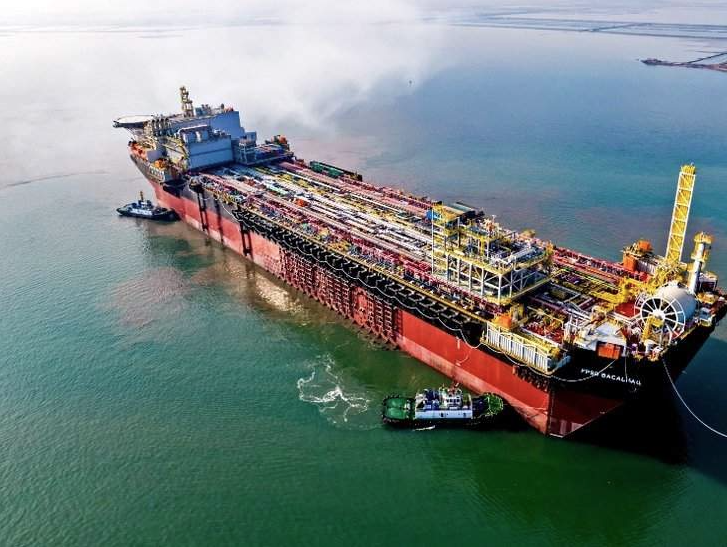
The Phase 1 development of Bacalhau involves an investment of approximately US$8 billion. Equinor is the operator and holds a 40% interest; ExxonMobil Brasil holds 40%, and Petrogal Brasil holds 20%. Pré-Sal Petróleo S.A. (PPSA) is responsible for managing the production sharing contract. The field is located about 185 km off the coast of Ilhabela in São Paulo State, with water depth exceeding 2,000 m. Phase 1 plans to deploy 19 production and injection wells, and engineering work related to the third injection well is currently underway. The project’s recoverable resources exceed 1 billion barrels of oil equivalent.
The associated FPSO Bacalhau is 370 m long and 64 m wide and uses a combined-cycle gas turbine power generation system, utilizing waste heat from the gas turbines for steam turbine power generation. Equinor disclosed that the facility’s CO2 emissions intensity per barrel of crude production is about 9 kg per barrel, below the global industry average of 17 kg per barrel cited by the company. The production facility is initially operated by MODEC, with operations planned to be transferred to Equinor later.
Since start-up, about 900 workers per day have been engaged in offshore production and related operations at the Bacalhau field, and approximately 3,000 helicopter flights have been carried out cumulatively for personnel transport and offshore operational support. The project has a planned production life of about 30 years, and Equinor expects the entire development and operating cycle to create about 50,000 jobs.
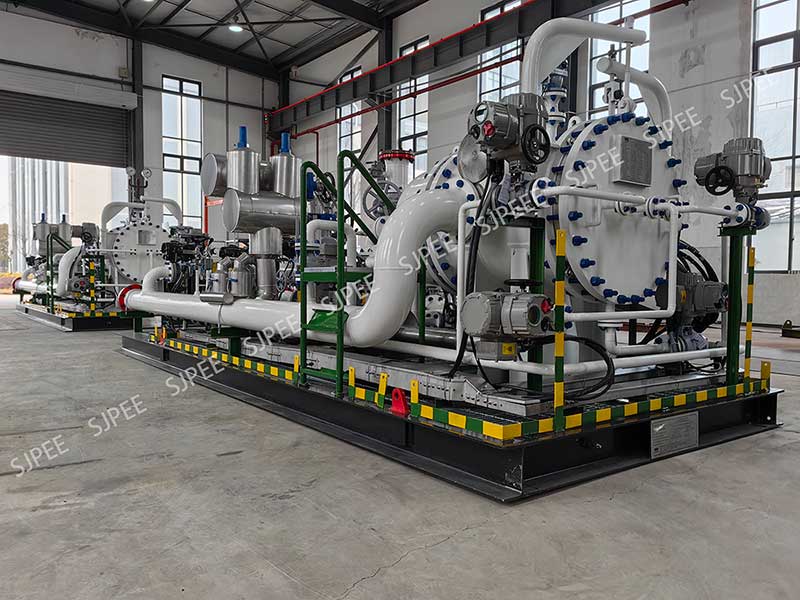
Shanghai Shangjiang Petroleum Engineering Equipment Co., Ltd.(SJPEE.CO., LTD. ) founded in Shanghai in 2016, is an integrated technology company spanning R&D, design, manufacturing and service. It focuses on separation and filtration equipment for the oil, gas and petrochemical industries. Its portfolio includes de-oiling/dewatering hydrocyclones, desanders for micron-sized particles and compact flotation units, as well as complete skid-mounted solutions, third-party equipment retrofitting and after-sales service. The company owns multiple proprietary patents and maintains a DNV-GL certified ISO-9001, ISO-14001 and ISO-45001 management system.
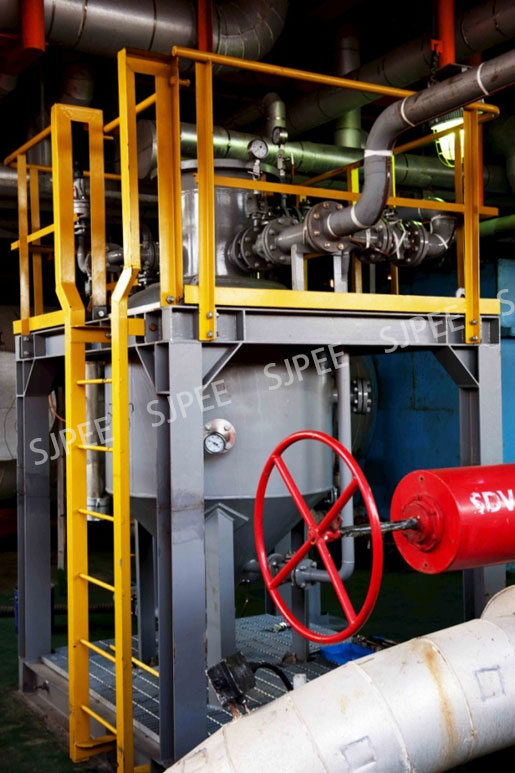
SJPEE’s high-efficiency cyclone desanders, recognized by international energy leaders, achieve a 98% separation rate. Manufactured with advanced wear-resistant ceramics, they remove 98% of particles as fine as 0.5 microns from gas streams. This enables produced gas reinjection for miscible flooding in low-permeability reservoirs—an important pathway for enhancing oil recovery in challenging formations. The units can also treat produced water, removing 98% of particles larger than 2 microns for direct reinjection, thereby improving water-flood efficiency and reducing environmental impact.
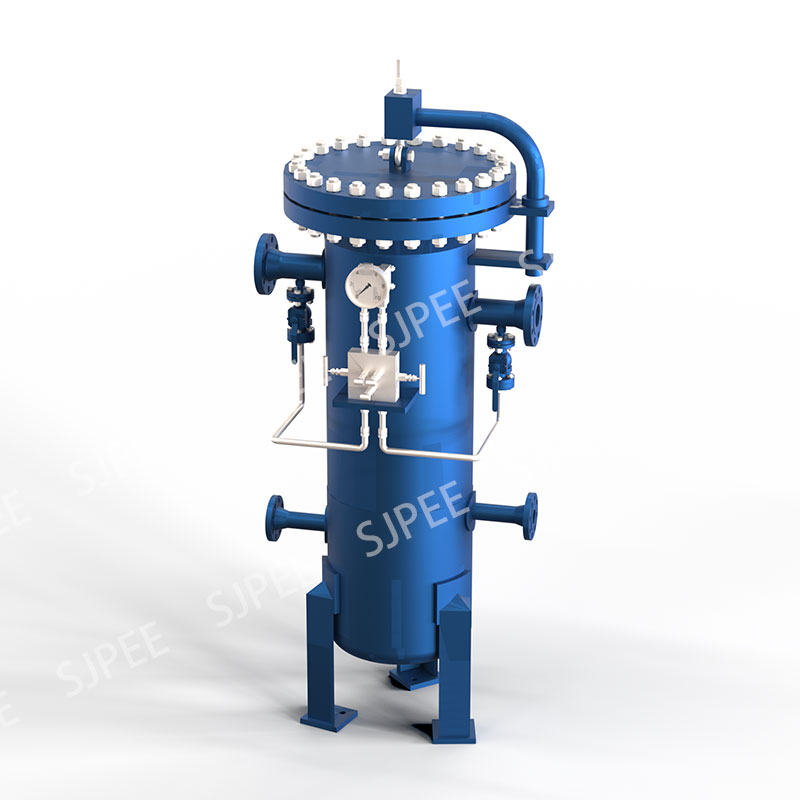
The new High Efficiency Ultra-Fine Particle Desander is a liquid-solid separation device that employs an efficient centrifugal principle. It separates suspended impurities—solids in produced water, seawater and condensate, fine particles in high-viscosity liquids and catalyst powder in reactors—from fluids (liquids, gases or gas-liquid mixtures). It captures solid particles down to 2 microns at 98% efficiency. The device offers high sand removal efficiency, a compact footprint, no external power or chemical additives, an operational lifespan of about 20 years, and online sand discharge without production shutdown.
Field-proven in major global fields operated by CNOOC, CNPC, Petronas and others across Southeast Asia, SJPEE desanders are installed on wellhead and production platforms. They ensure reliable solids removal from gas, well fluids and condensate and are essential to seawater purification, production stream protection and water injection/flooding programs.
SJPEE’s broader separation portfolio covers membrane systems for natural gas CO₂ removal, deoiling hydrocyclones, high-performance compact flotation units (CFUs), shale gas desanding, cyclonic dewatering packages with produced water treatment, and multi-chamber hydrocyclones, offering comprehensive solutions for the industry’s toughest challenges.
Post time: Oct-19-2026