
The U.S. Bureau of Ocean Energy Management (BOEM) has announced the fourth offshore oil and gas lease sale in the Gulf of Mexico. It plans to offer oil and gas companies approximately 15,104 unleased offshore blocks, with a total area of about 80.4 million acres (about 325,400 square kilometers). This lease sale is numbered BBG4, proposes a 12.5% oil and gas production royalty rate, and is scheduled to open bidding in March 2027.
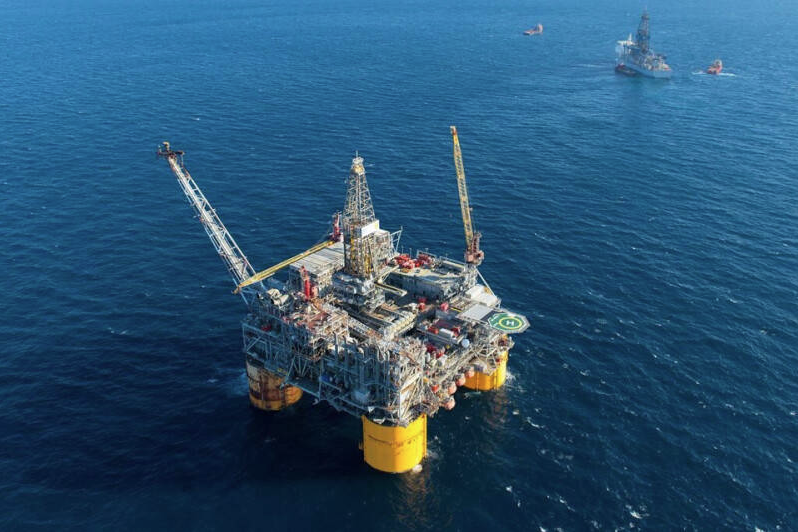
The proposed sale area is located on the U.S. Outer Continental Shelf in the Gulf of Mexico. The relevant notice documents set out the block boundaries, lease terms, minimum bid amounts, rental rates, and lease restrictions. The management agency has also published the proposed sale map, block information, and bidding materials for review by potential bidders.
Under the Working Families Tax Cut Act passed by the United States in 2025, the federal government must hold at least 30 Gulf of Mexico oil and gas lease sales by 2040. This BBG4 is the fourth sale required by the act. The first three were held in 2025 and 2026 and received high bids totaling approximately US$430 million.
According to data from the U.S. Bureau of Ocean Minerals Management, the Gulf of Mexico Outer Continental Shelf covers a total area of about 160 million acres and is estimated to contain 26.9 billion barrels of undiscovered but technically recoverable oil resources and 45.59 trillion cubic feet of natural gas resources. The 80.4 million acres planned for sale this time fall within the unleased block area, while the relevant resource estimates cover the entire Gulf of Mexico Outer Continental Shelf.
The proposed sale notice for this round is scheduled to be published in the U.S. Federal Register on October 9, after which a 60-day comment period will begin to seek the views of the governors of affected coastal states and local governments. After reviewing the comments, the management agency will issue a final sale notice at least 30 days before the planned bid opening date. Bidding is expected to take place in March 2027.
On July 10, 2026, the U.S. Department of the Interior merged the former Bureau of Ocean Energy Management and the Bureau of Safety and Environmental Enforcement into the Bureau of Ocean Minerals Management, which is responsible for unified management of U.S. offshore energy and marine mineral resources, including lease approvals, safety oversight, and environmental protection.
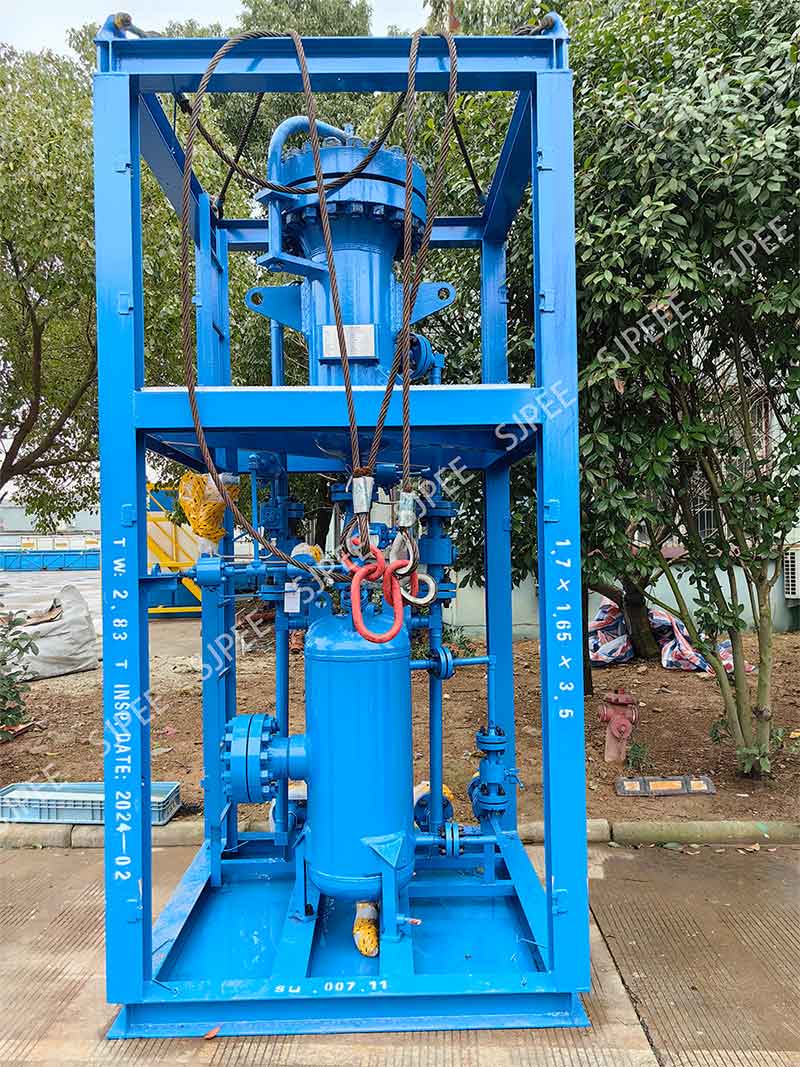
SAGA’s high-efficiency cyclone desanders, recognized by international energy leaders, achieve a 98% separation rate. Manufactured with advanced wear-resistant ceramics, the units remove 98% of particles as fine as 0.5 microns in gas streams. This enables produced gas reinjection for miscible flooding in low-permeability reservoirs—an important pathway for enhancing oil recovery in challenging formations. The units can also treat produced water, removing 98% of particles larger than 2 microns for direct reinjection, thereby improving water-flood efficiency and reducing environmental impact.
The new High Efficiency Ultra-Fine Particle Desander is a liquid-solid separation device that employs an efficient centrifugal principle. It separates suspended impurities—solids in produced water, seawater and condensate; fine particles in high-viscosity liquids; and catalyst powder in reactors—from fluids (liquids, gases or gas-liquid mixtures). It captures solid particles down to 2 microns at 98% efficiency. The device offers high sand removal efficiency and a compact footprint, requires no external power or chemical additives, has an operational lifespan of about 20 years, and enables online sand discharge with no production shutdown.
Field-proven in major global fields operated by CNOOC, CNPC, Petronas and others across Southeast Asia, SAGA desanders are installed on wellhead and production platforms. They ensure reliable solids removal from gas, well fluids and condensate, and are essential to seawater purification, production stream protection and water injection/flooding programs.
SAGA’s broader separation portfolio covers membrane systems for natural gas CO₂ removal, deoiling hydrocyclones, high-performance compact flotation units (CFUs), Shale gas desanding, Cyclonic dewatering package with produced water treatment, and multi-chamber hydrocyclones, offering comprehensive solutions for the industry’s toughest challenges.
Post time: Oct-10-2026