
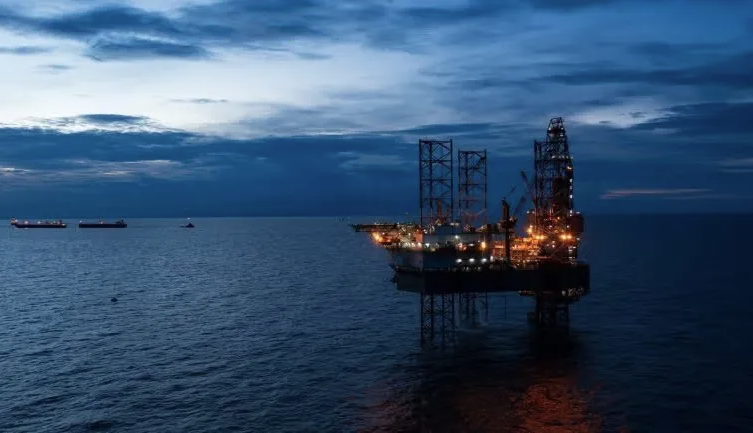
Recently, a consortium led by Shell, together with QatarEnergy and Namibia’s national oil company NAMCOR, announced the successful discovery of high-quality light oil via the Merlin-1X exploration well in Petroleum Exploration License PEL 0039, located in the Orange Basin offshore Namibia. This is the tenth exploration well drilled under this license and the most promising subsurface structure discovered in the block to date, further consolidating Namibia’s position as a global hotspot for deepwater oil and gas.
According to data repeatedly disclosed by NAMCOR to the industry between 2023 and 2025, the total recoverable oil and gas resources discovered offshore Namibia are estimated to be between 11 and 20 billion barrels of oil equivalent, making the country one of the world’s most successful deepwater exploration frontiers with the fastest resource growth.
01. Shell’s “Most Promising” Breakthrough in Namibia
The Merlin-1X exploration well, spudded in April 2026 in an ultra-deepwater area approximately 250 km off the southern coast of Namibia, has successfully encountered oil-bearing intervals of the Coniacian age. The geological results have excited the industry: good reservoir quality, light oil with only limited associated gas, and overall performance significantly better than all previously drilled wells under this license.
Eugene Okpere, Executive Vice President of Exploration, Strategy & Portfolio at Shell, commented on the achievement: “These encouraging results enhance our understanding of the potential of the Orange Basin.” He emphasized that Shell is advancing this opportunity through a “rigorous, data-driven approach” to determine commercial feasibility, and will focus investment on “material, competitive and resilient options” within its portfolio.
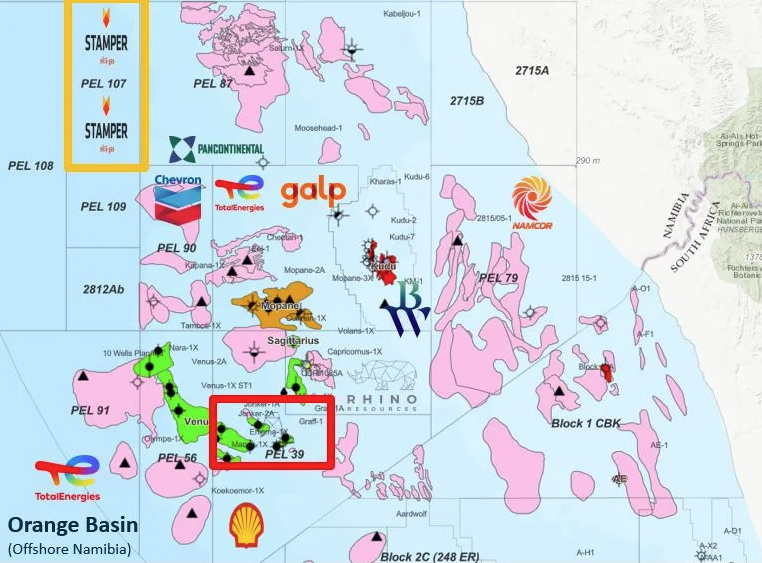
It is worth noting that Shell’s exploration journey in PEL 0039 has not been smooth sailing. Previously, Shell had drilled multiple exploration wells under this license, including Graff-1X, La Rona-1X, Jonker-1X, Lesedi-1X, Cullinan-1X, and Enigma-1X.
In January 2025, Shell wrote down the asset value of this block by approximately $400 million, citing a combination of reservoir permeability concerns (industry speculation widely pointed to the adverse impact of chlorite cementation on permeability in some reservoirs) and long-term oil price expectations. This decision once triggered widespread skepticism in the industry.
The Merlin-1X discovery, evaluated by Shell and its partners as “the most promising subsurface result obtained so far within this license,” has powerfully reversed the exploration narrative for the block and provides core geological support for the subsequent final investment decision (FID).
The equity structure of Merlin-1X reflects QatarEnergy’s deep involvement in international upstream assets in recent years. In this license, Shell and QatarEnergy each hold 45%, while NAMCOR holds the remaining 10%. QatarEnergy holds a total of four offshore exploration licenses in Namibia (PEL 0039, PEL 0056, PEL 0091, and PEL 0090), covering an area of approximately 34,000 square kilometers. Saad Sherida Al-Kaabi, President and CEO of QatarEnergy, characterized the discovery as “an important step that further strengthens confidence in the Orange Basin as an emerging world-class oil and gas province, aligning with QatarEnergy’s strategy to expand its international upstream portfolio through high-impact exploration.”
According to Shell’s disclosed plans, PEL 0039 will continue exploration and appraisal drilling in 2026 to further delineate resources and assess development potential.
02. Top 5 Discoveries in Namibia’s Orange Basin
The exploration narrative of Namibia’s deepwater Orange Basin began with a “double bang” in early 2022: Shell’s Graff-1X and TotalEnergies’ Venus-1X announced major light oil discoveries around the same time. In just four years, the basin has achieved an exploration success rate of 60%, far exceeding the average of 16% for other frontier basins in Africa. Cumulative discovered resources exceed 6 billion barrels of oil equivalent, and the pace of exploration mirrors the explosive discoveries in Guyana in the late 2000s. Based on discovery size and industry impact, the top five discoveries in Namibia’s Orange Basin can be preliminarily ranked as follows:
Top 5 Ranking (estimated by gross in-place resources)
No. 1: Galp Mopane Complex (PEL 83) – In 2024, Portugal’s Galp announced that the Mopane structure may contain up to 10 billion barrels of oil equivalent of in-place resources. With the highest estimated scale to date, it ranks first and was named “Discovery of the Year 2025” by Wood Mackenzie. Galp holds 80% interest in this block, with NAMCOR and Custos each holding 10%.
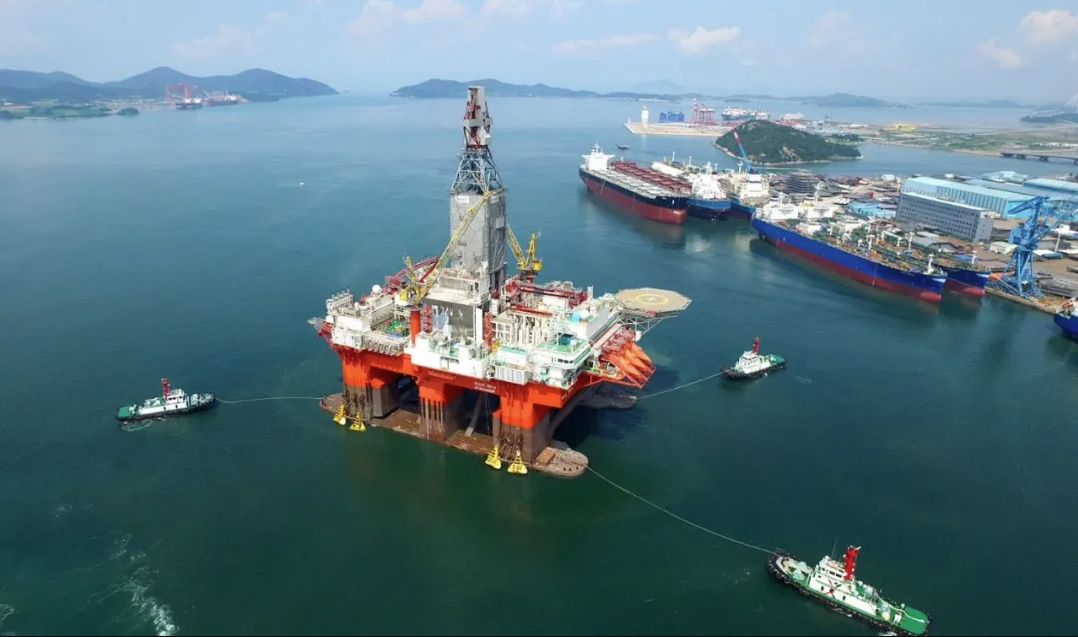
No. 2: TotalEnergies Venus-1X (PEL 56) – Estimated approximately 5.1 billion barrels of crude oil resources, with a water depth of 3,000 meters. It is the deepest, most complex, and most benchmark-setting ultra-deepwater discovery in the basin to date. A final investment decision (FID) is planned for 2026, with first oil targeted for 2029–2030.
No. 3: Shell Graff-1X & Jonker-1X (PEL 0039) – The two discoveries together total approximately 5.0 billion barrels of crude oil resources. However, reservoir permeability in the basin has been a subject of debate for Shell (chlorite cementation affecting some reservoirs), and substantial appraisal data will be required to determine the resource volume.
No. 4: Rhino Resources / Azule Energy Capricornus-1X & Volans-1X (PEL 85) – In 2025, Rhino confirmed a light oil discovery at Capricornus-1X. In October of the same year, Azule Energy (a 50/50 joint venture between BP and Eni) confirmed a condensate gas discovery via the Volans-1X well, with a net pay of 26 meters of condensate-bearing reservoir at an API gravity of approximately 40°. This marks both a highlight for independent explorer Rhino and a key entry point for BP and Eni into Namibia through Azule.
No. 5: Pancontinental PEL 87 Saturn Complex & Phoebe West / Northern Channel – The high-potential structures identified within this license have a total gross resource estimate of up to 6.1 billion barrels of oil equivalent (net recoverable), but exploration remains at an early stage with no drilling yet initiated, hence it ranks fifth.
The Orange Basin in Namibia has become a battleground for global energy giants: Shell (with 45% in PEL 0039) and TotalEnergies (with Venus) lead the first tier. QatarEnergy, holding four licenses covering a very extensive area, represents the Middle Eastern capital participating in the Orange Basin. BP and Eni have entered indirectly through their jointly owned Azule Energy. Chevron made a rapid entry by acquiring an 80% stake in the PEL 82 block in 2025. ExxonMobil and Woodside have also acquired exploration rights. Even Brazil’s Petrobras and Abu Dhabi’s ADNOC have begun to pay attention to Galp’s asset sale process regarding the Mopane complex.
03. Namibia’s Future Opportunities: Challenges and Prospects from Exploration Hotspot to Development Hub
According to the Africa Energy Outlook 2026 report released by the African Energy Chamber, the “high-impact wells” in Namibia’s Orange sub‑basin have recorded a 60% success rate since 2022. Coupled with the pace of discoveries exceeding 6 billion barrels of oil equivalent since 2022, this has made the country a true global benchmark for upstream exploration. However, at the same time, Namibia’s “above‑ground issues” – policy uncertainty, incomplete institutional frameworks, and infrastructure gaps – are becoming core constraints determining the speed of commercialisation. The supporting capacity of local port infrastructure remains weak, and the upstream legal system still needs improvement. This reality of “policy lag” has led to delays in signing Final Investment Decisions (FIDs) for some blocks with significant discoveries.
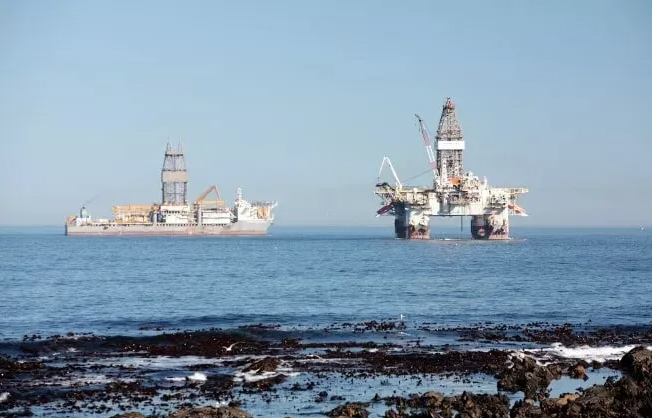
However, these “sunk cost” issues cannot change the objective geological reality — the Orange Basin’s potential is increasingly seen as comparable to Guyana’s as “the next giant oil-producing province in the South Atlantic.” Several authoritative research institutions have already forecast that between 2030 and 2035, with the development of Venus, Mopane and PEL 0039, Namibia’s peak oil production could reach 380,000–500,000 barrels per day, significantly exceeding the current levels of some OPEC member states in Africa.
On the global oil map, Namibia was once a forgotten corner; today, the successful exploration of the Orange Basin has put this “potential giant oil and gas province” in the South Atlantic at the top of global upstream headlines. It is expected that during 2026–2027, final investment decisions will be launched successively for the Venus, Mopane and Shell series developments. This country, which only achieved its first breakthrough four years ago, is very likely to lead more than half of Africa’s deepwater oil and gas supply growth over the next decade. As a Shell executive put it: “The story of Namibia is not about whether oil and gas exist, but whether we can unlock commercially viable reservoirs.” And Merlin‑1X’s answer is very likely: “Yes, we can.”
Post time: Jun-16-2026