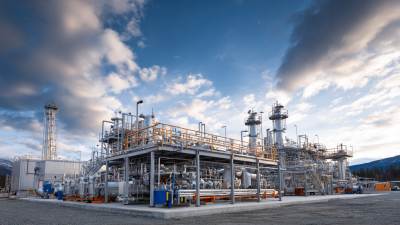
In the fast-changing world of Pre-compressor Natural Gas Desanding, industry folks are really stressing how important it is to have effective solutions in place. I mean, Dr. Emily Fisher from Natural Gas Solutions Corp. even points out, 'Dealing with desanding issues before compression can seriously boost efficiency.' It’s a reminder of just how crucial it is to tackle sand and other solid stuff early on in the process.
Pre-compressor Natural Gas Desanding isn’t just a nice-to-have—it’s absolutely key to keeping gas systems working smoothly. When sand builds up, it can cause wear and tear on equipment, not to mention those expensive downtime worries. So, companies keep hunting for new and better ways to improve their desanding techniques. That said, even with the coolest technology out there, some solutions still don’t quite cover all the specific challenges operators face.
Of course, we talk a lot about the top methods for desanding, but it’s just as important to recognize their limits. No single approach works perfectly everywhere. Different environments and gas types often need solutions that are a bit more customized. That’s why it’s smart to look at different techniques—so your system keeps running smoothly and you’re ready for whatever surprises pop up along the way. Honestly, the quest to find that perfect desanding solution is ongoing — and that’s what keeps things interesting.

Overview of Natural Gas Desanding in Pre-compressor Applications
Natural gas desanding is crucial in pre-compressor applications. Sand and other solid particles can severely impact compressor efficiency. The presence of these particulates leads to wear and tear on compressor components, causing potential failures. Understanding the desanding process is essential for maintaining a reliable gas supply.
Effective desanding solutions help in minimizing these issues. Techniques such as hydrocyclones and coalescers are commonly deployed. Hydrocyclones use centrifugal forces to separate sand, providing a first line of defense. Coalescers aid in aggregating smaller particles, ensuring cleaner gas enters compressors. Yet, not all solutions work universally; some methods may produce excess waste or require high maintenance.
Despite advancements, challenges remain. Addressing different sand sizes and compositions proves complex. Operators often find themselves evaluating efficiency versus cost. Continuous monitoring and adjustments are necessary for optimal performance. This ongoing process underscores the need for expertise in natural gas systems. Adapting to new conditions is part of the journey.
Importance of Desanding Solutions in Gas Processing Industries
Desanding solutions play a crucial role in gas processing industries. The presence of sand and solid particles can severely impact operational efficiency. They can cause wear and tear on equipment, leading to costly repairs and downtime. A reliable desanding solution minimizes these risks, ensuring smooth operations.
Effective desanding improves the quality of natural gas. It helps maintain compliance with regulatory standards. Without proper desanding, impurities can lead to product contamination. This not only affects the final output but can also disrupt safety protocols. Industries must consider the reliability of their desanding methods to avoid significant setbacks.
While many solutions exist, choosing the right one is complex. Some options may work well in certain conditions but fail in others. Process operators often encounter challenges in selecting the best technology. Regular assessments and improvements in these methods are necessary. Ultimately, balancing efficiency and reliability is a pressing concern in the gas processing sector.
Top 10 Pre-compressor Natural Gas Desanding Solutions
The following chart illustrates the efficiency of various desanding solutions in the natural gas processing industry. As desanding is critical to the operational efficiency and longevity of gas processing equipment, understanding the effectiveness of different solutions is essential.
Common Challenges in Natural Gas Desanding
Natural gas desanding is vital for maintaining efficient operations in gas plants. However, it presents several challenges. A significant issue is the variability in sand composition. This variability can affect the performance of desanding systems. Inconsistent particle sizes complicate the separation process. According to a report by the American Petroleum Institute, up to 30% of downtime in gas sector operations can be linked to inadequate desanding efforts.
Another critical challenge is the wear and tear on equipment due to abrasive particles. Studies indicate that over 40% of maintenance costs in gas processing facilities arise from handling sand. Regular inspections and maintenance are required, but they often lead to additional operational delays. Additionally, inefficient desanding solutions can lead to contamination, impacting gas quality. The introduction of advanced filtration technologies aims to alleviate these issues, yet the results are not uniform across all settings.
Operators must also address environmental concerns tied to sand disposal. Regulations vary significantly, complicating compliance. Some regions impose strict guidelines, making effective disposal challenging. This issue can lead to increased operational costs and project delays. Addressing these challenges requires ongoing innovation and research to develop more effective desanding solutions. The industry must remain adaptive and responsive to these complexities to improve overall operational reliability.
Top Technologies for Natural Gas Desanding Solutions
Natural gas desanding is crucial in maintaining pipeline efficiency and equipment longevity. A variety of technologies exist to address the challenge of sand and solid contaminants. Each method serves a specific purpose, with varying levels of effectiveness. Cyclonic separators utilize centrifugal force to separate solids from gas. This technology is well-regarded for its reliability and ease of maintenance.
Another prominent solution involves filtration systems. These systems trap particles as gas flows through. They require regular replacement to ensure optimal performance. However, they can become expensive over time. An oft-overlooked approach is the use of hydrocyclones. Their design enables them to handle high flow rates, but sediment buildup can hinder performance, needing careful monitoring.
Operators often face a balancing act when selecting desanding technologies. Factors like operating conditions and cost efficiency play significant roles. Understanding system limitations is essential. Regular assessments of chosen technologies can reveal areas for improvement. These insights drive innovation and enhance overall system reliability. Exploring these various methods can lead to better resource management and system performance.
Case Studies of Successful Desanding Implementations
Natural gas desanding is crucial for optimizing the efficiency of gas processing systems. Many companies have successfully implemented desanding solutions. For instance, a field study indicated that a well-designed desanding system can decrease the solid particle content in gas by up to 90%. This significant reduction improves the longevity of equipment and decreases operational downtime.
One notable case involved a mid-size producer facing frequent pipeline blockages. After employing a dynamic hydrocyclone system, they reported a 75% reduction in maintenance costs over a year. Their operational efficiency increased by nearly 20%. The use of real-time monitoring ensured that the system adapted promptly to changing conditions, further enhancing reliability.
However, challenges persist. Not all desanding solutions yield consistent results. Variations in gas composition can affect performance. Additionally, some systems may require higher energy input, raising operational costs. Industry reports have shown that investigating these nuances is essential for achieving optimal outcomes and avoiding costly missteps in future designs.
Future Trends in Natural Gas Desanding Technologies
The future of natural gas desanding technologies is evolving rapidly. As industries face stricter regulations, cleaner processes become essential. A recent industry report highlighted that nearly 30% of natural gas production suffers from contamination. This contamination can damage equipment and lead to costly downtimes. Advanced desanding solutions are being developed to combat these challenges.
Emerging technologies emphasize efficiency and sustainability. For instance, filtration systems that utilize nanotechnology show promising results. Such systems can reduce particle sizes to less than 5 microns. Additionally, data indicates that up to 40% reduction in maintenance costs can be achieved through improved desanding methods. However, the adoption of these technologies presents challenges. The initial investment can be significant, and industry players often hesitate due to financial uncertainties.
The integration of AI and machine learning in desanding solutions highlights another promising trend. These technologies can analyze data and predict maintenance needs in real time. Despite the advantages, companies still wrestle with the complexity of implementation. The path forward requires not only technological innovation but also a cultural shift in how organizations perceive maintenance and reliability. Balancing investment with expected returns remains a critical area for reflection.
Conclusion
The article "Top 10 Pre-compressor Natural Gas Desanding Solutions" provides a comprehensive overview of the critical role of desanding techniques in pre-compressor applications within the gas processing industry. It emphasizes the significance of effective desanding solutions in enhancing operational efficiency and reducing potential equipment damage caused by sand and particulate matter. Challenges faced in natural gas desanding, such as varying sand sizes and flow conditions, are discussed alongside leading technologies that address these issues.
Furthermore, the article outlines key evaluation criteria for selecting appropriate desanding solutions and presents case studies that highlight successful implementations. As the industry evolves, it also explores future trends in natural gas desanding technologies, underscoring the ongoing need for innovation in pre-compressor natural gas desanding to meet increasing operational demands and environmental standards.